Tag: TPS

JHISN Newsletter 11/21/2026

Dear friends,

No one knows for sure what political difference the dramatic outcome of the November elections will ultimately make. But for many of us, it certainly felt like a moment to celebrate, to cautiously hope, and to look around and start envisioning what might now be possible. 

And yet, our newsletter remains focused on the ongoing emergency so many immigrants still endure. Our first article gives an early post-election assessment of what the Democratic Party at the national level is signalling re: immigration policy. The news is not good. We remind ourselves that local, community-based, grassroots politics are necessary to keep pushing Congressional Democrats beyond cowardice and complicity. We then offer another update on the Trump regime’s systematic efforts to dismantle the decades-old Temporary Protected Status (TPS) program, and the pushback to try to regain legal status for hundreds of thousands of Haitian and Nepali residents—including our neighbors here in Queens.  

Newsletter highlights:
  1. Post-election Democratic majorities: what will they do for immigrants?
  2. Latest on TPS status for Nepalis and Haitians


1. Will the “Blue Wave” Help Immigrants? 

In the wake of a “blue wave” mid-term election, it seems as if the country is holding its breath, waiting to see if anything is actually going to change. For immigrants living in a state of emergency, the answer will be particularly consequential.

It is now clear that voters, especially Latinos, turned against the cruelty and chaos of the Trump regime’s mass deportation campaign. A Forbes report on exit polls indicates that 60% of all voters disapproved of how ICE is doing its job. 69% of Latino voters disapproved, and 87% percent of those disapproving voted Democratic. 

Trump’s response to this clear shift in popular sentiment was to elevate Stephen Miller—the main architect of the regime’s mass deportation campaign—to the key position of White House Chief of Staff. Trump insists that his policies on immigration will remain unchanged. After all, ICE has locked in more than $113 billion in Congressional funding over the last two years. 

Nevertheless, Democrats have won solid, if not veto-proof, majorities in both the Senate and the House. What will their response to the immigration emergency be?

Early signs are far from reassuring. At a well-publicized event outside Washington, D.C., on November 11, progressive and moderate Congressional Democrats united around a mild, “bipartisan” approach to immigration. Representative Henry Cuellar (D-Texas), who expects to chair the House appropriations homeland security subcommittee next year, said he “has a list of guardrails to revert ICE…to its role prior to Trump’s second term.” 

Much of the discussion centered on reviving a moribund “reform” bill that has garnered limited Republican support. The 2023 Dignity Act would allow those in the country “illegally” before 2021 to register for temporary legal status, as long as they meet various stringent requirements. Those accepted would have no path to citizenship and no eligibility for welfare programs. The Act also beefs up border enforcement and raises penalties for immigration offenses.

It’s striking that victorious Democrats somehow imagine this to be a moment to promote legislation that asks millions of undocumented immigrants to register with the Trump regime, and to provide extensive biometric and personal information, for a chance at temporary, limited legal status.

On the other hand, a post-election coalition of over 150 immigrants rights groups is publicly calling on Democrats:

”… to cut funding for federal immigration enforcement agencies and create a pathway for citizenship when the party takes control of the next Congress. In a letter sent Monday [November 9]… the groups urged Democrats to use their new congressional majorities to ‘prioritize a bold agenda’ on immigration and to hold the Trump administration accountable for the chaos fueled by its immigration crackdown.” —The Hill, 11/09/26

Notably, the letter insists on a pathway to citizenship for immigrants “without unnecessary and harmful compromises.” It advises Congress to freeze funding for ICE and Border Patrol until “transformative” reforms are made, and urges them to claw back immigration enforcement funding that Republicans had passed using the parliamentary maneuver of “reconciliation.” Signatories include the New York Immigration Coalition and the Worker Justice Center of New York.

Local and state Democrats often seem to respond more fluidly and directly to the human emergency posed by ICE’s mass detention and deportation campaign than their national counterparts. NYC Mayor Zohran Mamdani, whose election in 2025 could be considered the leading edge of the current blue wave, is an outspoken opponent of mass deportation. He recently demanded that ICE stop using city parks and parking lots as staging areas for immigration raids. “ICE has no right to use our property as a base for tearing families apart,” Mamdani said. “That goes for every park and every lot this City owns….If they keep coming back, we will see them in court.” This prohibition is supported by Governor Hochul.

It’s important to recognize that activist, street-level resistance to ICE contributed significantly to the “blue wave” by transforming public opinion about ICE throughout the country: 

“Left-leaning groups in Los Angeles, Chicago, and mostly notably Minneapolis organized aggressive opposition to Trump’s immigration raids in their communities, even as Democratic Party officials largely [accepted] that any discussion of immigration benefits Trump…. It was critical to have a strong activist community loudly casting the administration as authoritarian, essentially forcing the media and Democratic officials to stop ignoring the obvious.” —TNR, 10/10/26

Our own neighborhoods of Jackson Heights, East Elmhurst and Corona are part of this community resistance powering the “blue wave”—and requiring accountability from national Democrats. 

For instance, the ramped-up ICE presence on our streets starting this summer has been challenged by Queens Neighborhoods United, Hands Off NYC, ICE Watch, Indivisible and other grassroots local activists—providing warnings, documenting arrests, identifying staging areas, exposing illegal actions, and creating friction wherever agents of mass arrest and deportation appeared. 

And on Sunday, October 8, young people from local immigrant justice group Desis Rising Up and Moving (DRUM) initiated a state-level campaign against ICE’s horrible “shock gloves” that deliver a disabling electric shock to those they touch. DRUM Youth are gathering petition signatures demanding that Governor Kathy Hochul do more to prevent the use of the gloves in New York. 

Even after “blue wave” elections, it seems likely that local struggles will still be the center of gravity for anti-ICE activism. Congressional Democrats as a group must continue to feel pressure from below, as justice groups and outraged state and local residents demand immediate attention to immediate needs: the restoration of TPS, the end of warrantless arrests, the shutdown of ICE detention centers, and the thwarting of militarized ICE thuggery. In the midst of the blue wave, we can still see how resistance originates not at the ballot box but in our neighborhoods, our schools, our workplaces, and on our streets.

WHAT CAN WE DO?
  • Sign DRUM’s petition to Governor Hochul against ICE shock gloves.
  • Monitor NYC ICE Watch and respond to their local alerts.

2. Update on TPS Status for Nepalis and Haitians

As one brutal tactic in its anti-immigrant campaign, the Trump regime has been trying to eliminate Temporary Protected Status (TPS) for hundreds of thousands of immigrants, disregarding the dangerous conditions in various countries that meet the criteria for TPS. TPS permits eligible individuals from countries with unsafe conditions to live and work in the US temporarily. Unsafe conditions include natural disasters as well as armed conflict or other conditions that make living unsafe. TPS is renewable but not guaranteed and does not enable people to apply for citizenship. As follow-up to our previous reports on the weaponization of TPS, we look at current efforts to reinstate legal status for Nepalis and Haitians stripped of their protections. 

Nepali TPS

After various court decisions, on February 9, Nepal’s TPS designation and work authorization was finally terminated. This is dire news for 12,700 Nepali nationals living in the US.

Between January and April, there were large charter flights carrying 298 deported Nepali nationals back to Nepal. Charter flights paused when the Iran war began, but between July and October 22, 29 more Nepalis were deported on commercial flights.

On August 26, Nepal experienced catastrophic flooding affecting over 84,000 people, with additional floods and landslides in September. Because of these disasters, 57 members of Congress sent a bipartisan letter to President Trump and DHS Secretary Mullin expressing the need for renewed TPS for Nepal. They have not responded. In October, local immigrant justice group Adhikaar, together with the Non-Resident Nepali Association plus 50 other Nepali and allied organizations, urged the government of Nepal to request a new TPS designation.

Haitian TPS

The order to terminate TPS for Haitians came on July 27, and a previous stay of that order was lifted on August 5, 2026. This affects more than 350,000 Haitians living in the USA.

Haiti is a dangerous place with gangs controlling most of the capital; armed groups continue to perpetrate killings, kidnappings, and attacks against civilians, and nearly 1.5 million people are internally displaced. The US government has issued a travel advisory. Nevertheless, more than 470 Haitians were deported between August 30 and September 17, and 140 more in October.

Guerline Jozef, Founder and Executive Director of Haitian Bridge Alliance, stated:

“The Trump administration knows Haiti is not safe, yet it continues to deport people into a humanitarian catastrophe. Stripping hundreds of thousands of Haitians of Temporary Protected Status while sending families into conditions of violence and instability is a profound assault on human dignity.”

About 15,000 Haitians live in Springfield, Ohio. Many had TPS, some are citizens or have other legal status. Since August, many have lost their jobs, others have left the country, and those remaining live in fear. Resident Haitians in Springfield have been called to ICE offices to receive ankle monitors and turn in their passports. Five Springfield residents were deported in October.

Members of Congress have tried to get TPS extended for Haitians. In April, the House had enough bipartisan support to pass H.R. 1689  to extend TPS for Haitians until April 2029. In June, Senators Edward Markey and Lisa Blunt Rochester introduced the companion Senate bill 4814, which awaits approval. The bill currently has 46 cosponsors. The Haitian Bridge Alliance is urging people to ask their Senators to support the bill.

WHAT CAN WE DO?


In solidarity and with collective care,

Jackson Heights Immigrant Solidarity Network (JHISN)


Follow @JHSolidarity on Facebook and Twitter and share this newsletter with friends, families, neighbors, networks, and colleagues so they can subscribe and receive news from JHISN. 
JHISN Newsletter 07/25/2026

Dear friends,

We often struggle to decide what stories to write for the newsletter: how to choose from the cascade of immigration news; what will promote solidarity without softening the brutal reality of what is happening in the US. For this newsletter, it was easy to decide that we had to report on a recent violent ICE arrest here in Jackson Heights. And then focus on the ugly consequences for New York’s health care system because of the cancellation of Temporary Protected Status (TPS) for Haitians.  

For a deeper and wider dive into news about, for, and by immigrants, please keep the NYC-based online news outlet Documented on your ‘must read’ list. They do an extraordinary job keeping us informed and promoting an immigrant-centered and social justice lens.

Finally, to supplement our story about Haitians losing TPS status, see this report on how one senior living center in California is already being affected by the forced exodus of Haitian health care workers.

Newsletter highlights:
  1. ICE unleashed in Jackson Heights
  2. Threats to Haitians and the NY health care system


1. How ICE Is Coming To Our Streets—Again.  

“We are horrified by federal immigration enforcement operations that deliberately infringe upon First Amendment rights to assemble and dissent. The use of intimidation, surveillance, and deadly force against lawful protestors is not public safety—it is repression.” —Statement from the League of Women Voters on Federal Immigration Enforcement and the Erosion of Constitutional Rights, January 2026

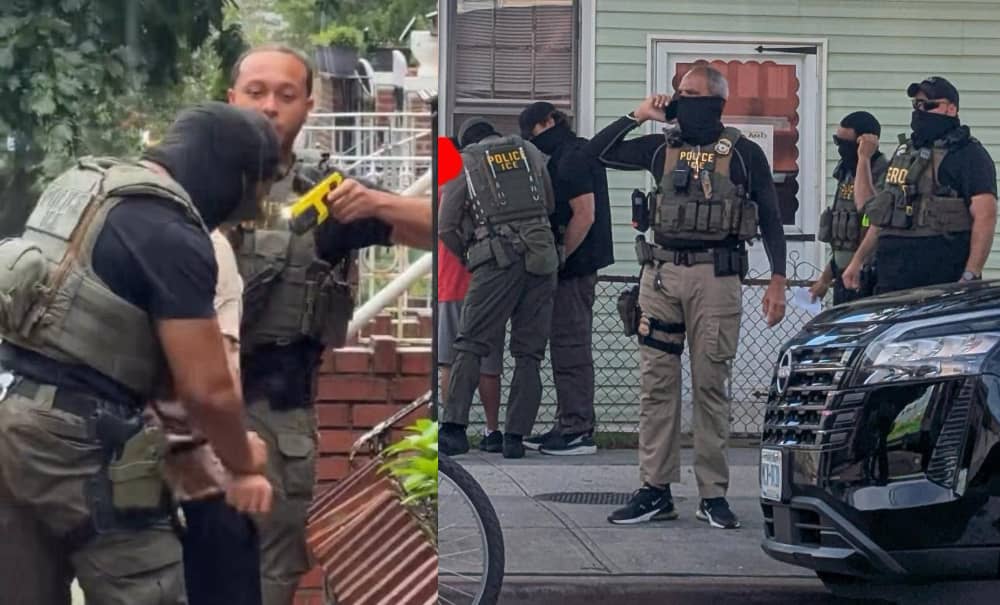
Five blocks away from the Jackson Heights Shopping Center on 31st Avenue, a woman walked. Protected from the rain by an umbrella. She noticed two ICE agents grabbing the arms of a man on the street about 20 feet in front of her. She crossed the road to avoid walking directly past them. The agents had tactical vests with POLICE ICE patches velcroed on the front and back. They carried holstered guns. Handcuffs dangled from their belts. One was illegally masked with a neck gaiter covering his mouth and secured over his ears by his own black baseball cap: its brim was angled low, allowing only the strip of his face with his eyes to be seen. The other agent was unmasked. The man was not struggling. The masked agent forcefully grabbed the man’s wrists; the man’s body twisted in reaction, and he struggled to maintain balance. There was no threat in his struggle. The agents’ lives were not in peril. Yet the unmasked agent chose to raise his left arm nonchalantly, without any urgency or need to defend himself, and aimed a taser inches from the man’s chest: violating recommended considerations for taser deployment by law enforcement. His verbal direction while pointing the taser was minimal and vague: “Cut the shit.” The two agents walked the man to a Black Hyundai Palisade SUV, LZW 7506. Nothing more is seen of them. This was July 9th in Jackson Heights.

Using the SALUTE reporting method, this 90-second encounter would be reported as:

S: 2
A: Arrested a man
L: 81st Street and 31st Avenue
U: ICE
T: 5:14 pm
E: Tan ICE vests, masked, taser

The only reason we even have this information is because a Rapid Response (RR) group member was walking the streets, paying attention to and legally documenting the actions of ICE agents. After the man was taken away, an RR team located a family connection for the man. Because of that volunteer work, the family would now know what happened to him. (The same RR team is currently searching to locate a family contact for someone else recently taken from 108th Street at 45th Avenue.) Since the federal government is not informing people when they move ICE detainees, how else would this information be discovered? 

The critical work for any RR action is to establish communication with the person being targeted. Let them know you’re there to help them, ask them for a phone number of a family member or contact that you can call to tell what has happened to them, or any information to help know more about them. The faster an ID can be made, the faster legal support can be gathered. 

The June 2026 budget reconciliation bill that ended the US government shutdown and funded Homeland Security for three more years “did not include basic guardrails like required oversight for detention, transparency measures requiring ICE to provide basic detention data to the public, and some basic civil rights protections in immigration enforcement.” It also gave $350 million for ICE to carry out enforcement actions in cities or states DHS decides are “non-cooperating” with Trump’s mass deportation agenda. It allows people to be taken by ICE if they were arrested for minor offenses, and ICE can also take someone if they were ever charged with the federal offense of unauthorized entry, even if charges were later dropped.

When Markwayne Mullin replaced Kristy Noem as DHS secretary, he said his key goal was to not be the lead story every single day. Yet, his team continues to murder people publicly and blame the victims with impunity. Mullin’s public response when asked how his agents would be held accountable was to say DHS will “turn up the heat on the streets”. The FBI has recently announced it will no longer take the lead on “assault on a federal officer” cases involving ICE and other Department of Homeland Security agents. Instead, Homeland Security Investigations will be responsible. Since the start of the second Trump presidency, no officers have been charged in any of the 9 killings by agents, and the federal government has suggested state prosecutors don’t have jurisdiction to investigate federal officers.

In summary: we can expect more on-the-street ICE activities and will see no change in tactics regarding overtly harsh enforcement techniques of non-criminal immigrants. We can anticipate more murders of anyone in proximity to ICE activities, and no independent agency will hold accountable the agents who kill. We will continue to see an increase in protesters being charged falsely with the once-obscure 18 U.S.C. 111 statute, which makes it a federal crime to assault or forcibly impede a government officer. We therefore need more people mobilized in Rapid Response groups to stand up for the disappeared as well as for our constitutional rights.

WHAT CAN WE DO?
  • Participate in neighborhood walks for a Rapid Response group in these key areas:
    • 1-2 block radius of any 7 train stop in the area (Jackson Heights, Elmhurst, Corona)
    • Most of Corona south of Northern Blvd. to just south of Corona Ave.
    • All along 111th, 108th streets
    • 1-2 block radius of the Ideal Supermarket by Corona Ave at 102nd street
    • Along 45th Ave., the LIRR underpass
    • Eastern side of Jackson Heights closer to Corona 
    • North of Northern Blvd. along 31st/32nd Aves.
    • Staging sites: FMCP parking lots, QCM parking lots, parking lots along Northern Blvd./Queens Blvd. 
  • Do what you can to help the Legal Defense Fund achieve their “6 Steps to End ICE and Other Federal Law Enforcement Abuses in Our Streets” 
  • Support efforts to enforce gambling laws against prediction markets which profit from their speculations on ICE arrests.

2. Loss of TPS for Haitians Endangers New York’s Healthcare System

“During COVID, we knew we were exposed. We knew we could be the next one, but guess what? We showed up every day. Some of us lived in the hospital for months. And this is how we are being repaid.” —Dr. Marie Paul, founder of Haitian Nurses Network

In November 2025, then Secretary of Homeland Security Kristi Noem declared that Temporary Protective Status (TPS) for Haitians would end on February 3, 2026, but on February 2, a US District Court for the District of Columbia put a stay on that decision. On June 25, the Supreme Court removed the stay, permitting the administration to remove TPS for Haitians and Syrians. The decision put 350,000 Haitians and 6,100 Syrians in danger of deportation. The decision disregarded the continuing chaos in Haiti. It also invites turbulence in New York State’s health care system where thousands of Haitians currently work. 

The court decision was not effective immediately. A 32-day delay is required before actions can take place, so on July 10, US Citizenship and Immigration Services (USCIS) announced that the current work permit expiration date for Haitians with TPS is July 24, 2026. The state has about 56,000 Haitian residents; the city has around 5,400. The most obvious consequences of the court’s decision are the total disruption of Haitian families’ lives and well-being as well as their inability to send money to relatives in their country of origin. Another serious consequence is economic damage. Nationwide, Haitian TPS holders contribute $5.9 billion to the US economy, including $1.1 billion to New York state and $281 million in federal, state and local taxes.

Additionally, the health care industry will be severely disrupted. Thousands of Haitians provide essential care as nurses and nursing assistants across New York’s hospitals, as home health aides to the elderly, and as caregivers in long-term care facilities. All their patients and clients will be severely affected if Haitians are unable to continue working.

According to an amicus brief filed in April by Letitia James and 18 other state attorneys general, there are tens of thousands of Haitian TPS holders nationwide who work in critical services including health care. The American Immigration Council states that 112,000 Haitians work nationwide in health care, including 58,000 home health aides.

The policy group FWD.us estimates there are 25,000 Haitian TPS holders working in New York state, including 5,000 caregivers and 2,000 nursing assistants who, along with other workers, contribute $141 million annually in state and local taxes.

It is well-known that there is a nursing shortage in New York City, and the loss of these TPS holders will only increase the problem.

“Even with the current numbers that they have, including TPS workers, there is still a nursing shortage. Removing even a small percentage of these people will further impact our ability to provide quality care. There is no replacement pipeline. That’s why I’m losing sleep. My concern is, what happens to patients?” —Dr. Cherlie Magny-Normilus, a family nurse practitioner and assistant professor of nursing at New York University

There are efforts in Congress to alter these consequences. In April, the House passed a bill with bipartisan support to extend TPS protection for Haitians for three years. After the Supreme Court ruling, Senators Sheldon Whitehouse and Jack Reed presented Senate bill S.4814 to extend TPS for Haitians, and on July 6 Representative Mike Lawler (NY-17), a strong advocate for Haitians in his district, urged the Senate to take up the bill.

In the meantime, some families threatened with deportation may stop going to work, avoid school or public spaces, or withdraw from daily life because of ICE fears. For TPS holders, the main option now is to check for any other form of immigration relief and to start concrete planning in case TPS ends.

WHAT CAN WE DO?

In solidarity and with collective care,

Jackson Heights Immigrant Solidarity Network (JHISN)


Follow @JHSolidarity on Facebook and Twitter and share this newsletter with friends, families, neighbors, networks, and colleagues so they can subscribe and receive news from JHISN. 


JHISN Newsletter 06/27/2026

Dear friends, 

When good immigration news is hard to find, we look harder. The notorious Alligator Alcatraz detention camp in Florida is fully shut down as of this week, less than a year after it opened with sadistic fanfare from Trump’s minions. We hope, with many of you, that the expansion of Mayor Mamdani’s political power with this week’s primary victories will strengthen a pro-immigrant, anti-authoritarian agenda. And a Trump lawsuit targeting four NJ cities for allegedly “unconstitutional” sanctuary policies was just tossed out by a federal judge.

But the bad news is really terrible. Thursday’s Supreme Court ruling that allows the federal government to continue stripping Temporary Protective Status (TPS) from hundreds of thousands of US residents is a nightmare. Most immediately, 350,000 Haitians and 6,000 Syrians are now facing the reality of losing their TPS legal status by July 1—a loss that will affect everyone who is their neighbor, co-worker, healthcare patient, or friend.   

Our newsletter covers some of the mixed good/ bad immigration news out of this year’s NYS legislative session, which ended in early June. We then update you on the ongoing legal campaigns—and harassment—of two high-profile international students from Columbia University targeted for deportation.

Newsletter highlights:
  1. NY State Legislature gestures toward immigrant protections
  2. Deportation threats to Mohsen Mahdawi and Mahmoud Khalil


1. Latest NY State Legislation Falls Short On Immigrant Protection

On May 21, NYS Assembly Speaker Carl Heastie noted that the 2026-27 state fiscal budget includes legislative provisions, signed by the governor, that protect our neighbors throughout New York from aggressive federal immigration enforcement. He suggested that local governments will be prohibited from collaborating with federal immigration enforcement officers and private detention facilities. He highlighted provisions that “will protect children in their schools and establish sensitive locations within our communities.” The official press release received endorsements from various elected officials, including Queens Assembly Member Catalina Cruz.

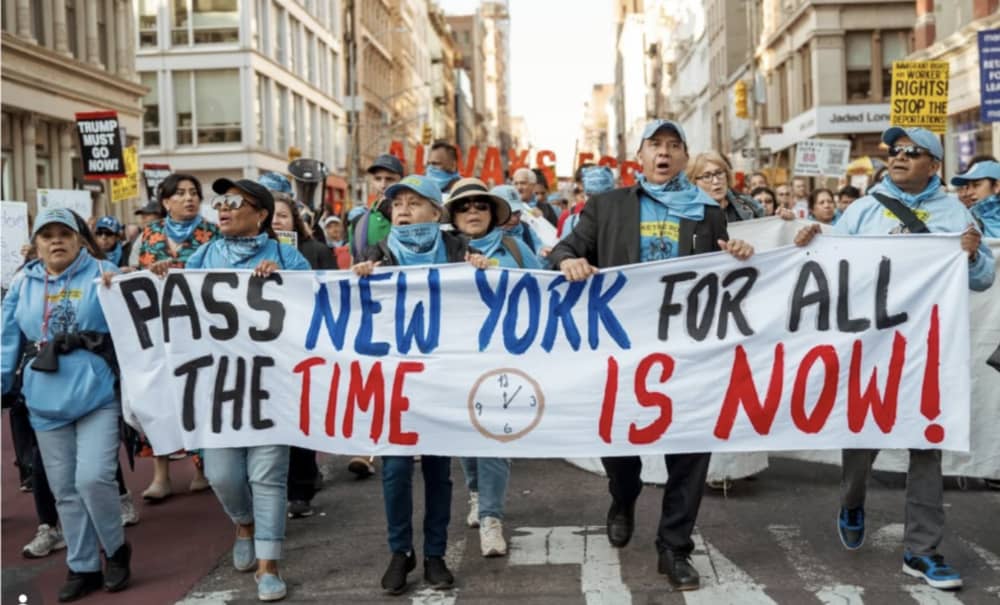
The perspective of immigrant justice supporters of the New York For All Act—proposed legislation which was never brought to a vote in the state legislature—was markedly different. The multi-organization coalition advocating for New York For All said, “The lack of political courage and moral leadership in Albany – and the failure to take a bold stand in the face of rising xenophobia – means that New York’s immigrant communities will continue to live with the threat that any encounter with government agencies can result in separation from their families.” 

The New York Civil Liberties Union (NYCLU) outlined some of the Enacted Budget’s key elements, explaining which protections were included or fell short:

  • State and local employees may not gather information about immigration status, and cannot share personal data of NY residents with ICE…but the police are excluded from this restriction.
  • “Sensitive locations,” including hospitals, churches, and private homes, can deny entry to ICE agents. 
  • The right to free public education for children, regardless of the family’s immigration status, was established.
  • State and local agencies may not rent space to ICE for immigration detention nor financially support immigration detention facilities.
  • New Yorkers can sue local, state, and federal officials in state court when their constitutional rights are violated using the newly established Office of Immigrant Trust.

Republicans claim that these new protections mean that “New York is now a sanctuary state on steroids.” But there are, in fact, at least three significant elements missing from the new budget that progressive forces had fought for. First, although the formal 287(g) agreements that allow local governments to work with ICE (previously signed by twelve New York law enforcement agencies) were banned in New York, informal collusion between local police and immigration enforcement was not prohibited—that was called for in the New York For All Act. Murad Awawdeh, Executive Director of the New York Immigration Coalition, noted, “The legislative package falls short of offering comprehensive protections by continuing to permit informal law enforcement collusion with ICE and Border Patrol.”

Second, state-funded counsel for immigrants facing deportation, part of the Access to Representation and the BUILD Act, was not included in the budget package. Although some money was secured for immigrant legal services, it was less than half of the $175 million called for by immigrant advocates.

Finally, the new measures banning face coverings for state, local, and federal officers in New York still allow for “tactical equipment” that covers faces.  Even with this legal loophole permitting ICE to deploy with tactical face masks, the federal government initiated a lawsuit against New York four days before the face mask ban was scheduled to go into effect. The Department of Justice has also initiated legal action against New Jersey, California, and Virginia, which sought similar mask restrictions. 

The New York Bar has explained why many of the items demanded and signed into law do not violate federal laws about police power and preemption. None of those explanations will stop the threats from Homeland Security to conduct an ICE surge in NYC. Passing the entire New York For All Act would help strengthen legal action against the overreach and violations of basic rights by ICE and border patrol federal agents.

WHAT CAN WE DO?

2. Deportation Threat Ongoing for Palestinian Student-Activists at Columbia University

 “[T]he administration is abusing immigration law to silence me for speaking the truth about Palestinian suffering and genocide. When a government weaponizes immigration to punish speech, millions of immigrants and citizens feel that blow.” —Mohsen Mahdawi (June 10, 2026)

In Spring of 2025, Mohsen Mahdawi and Mahmoud Khalil, both Columbia University students, became two of the most prominent faces of international student-activists targeted for their Palestine solidarity work. The newly-installed Trump regime quickly weaponized immigration law and accusations of antisemitism to incarcerate both young men in its broader campaign to silence and punish university-based mobilizations against the US-backed Israeli genocide in Gaza.

Both men are Palestinian. Khalil was born in a refugee camp in Syria; Mahdawi in a refugee camp in the occupied West Bank. Khalil is a graduate of Columbia’s prestigious School of International and Public Affairs (SIPA); Mahdawi is currently enrolled in the MA program at SIPA. Both are green card holders and legal US residents. Both were accused of nothing beyond the “memos” from Secretary of State Marco Rubio stating that their presence in the country might undermine US foreign policy goals. Both were eventually released from detention after public outcry and legal challenges. 

And … both are still threatened with deportation through legal proceedings pursued by the federal government, even as their names have faded from most headlines.

Their ongoing legal battles differ. An immigration judge in February 2026 ruled that the deportation case against Mohsen Mahdawi be dismissed. Trump’s DOJ fired that immigration judge (unlike other judges, immigration judges serve at the will of the federal government) and appealed the decision. The US Board of Immigration Appeals (BIA) ruled that the deportation case could go forward, and Mohsen’s case went to a second immigration judge who this month issued an order of removal that would send Mohsen to Jordan. Nevertheless Mohsen remains in the US while his legal team challenges the deportation order in the First Circuit Court on constitutional grounds. Mohsen declared:

“… I’m going to cut to the core of this issue, which is an issue that is related to the First Amendment. Do I have, as a green card holder, as a lawful permanent resident for 12 years, never committed a crime — do I have the rights that actually the citizenship questionnaire that I get tested on states that I do … do I have the right to free speech, freedom of assembly and freedom of expression?” —on Democracy Now! (June 12, 2026)                                                              

Mahmoud Khalil’s case is on a different track, though he also is protected for now from a deportation removal order that has been set in motion. His legal team made a second appeal in May 2026 to the US Board of Immigration Appeals (BIA) to dismiss the deportation case against him, after new revelations of government misconduct. The Trump regime is accused of “secretly engineering” the outcome of his case. The allegations of misconduct are corroborated by statements from former immigration judges, former BIA workers, and accumulating evidence that top government officials pressured judges to “decide” cases with predetermined outcomes in spotlight cases like Khalil’s, and to expedite deportation orders. One legal decision against Khalil was handed down by the BIA in a mysteriously speedy nine days. 

Meanwhile, a legal challenge in the Third Circuit Court of Appeals was decided in late May against Khalil, and a new challenge was immediately filed by his team in the Fifth Circuit Court of Appeals, which also separately requested a Supreme Court review of the Third Circuit decision. “We hope the Supreme Court will recognize how dangerous the Third Circuit’s decision was, not just for Mahmoud but for other non-citizens the administration has its vengeful sights upon,” said Baher Azmy, legal director at the Center for Constitutional Rights.

Regardless of the outcome of their cases, Mohsen and Mahmoud remain targets of merciless legal harassment through a federal government campaign to deport them—and to silence, repress, and frighten others who would speak out.  

Columbia University has to date made no public statements in support of Mohsen, a current student, or Mahmoud, a recent graduate. The University has been operating since July 2025 under an unprecedented “settlement”’ with the Trump regime, in which the University paid the government $221 million, and agreed to a set of institutional changes demanded by the federal government. One of those demands was that the University start asking all international applicants “questions designed to elicit their reasons for wishing to study in the United States.” Or, in the words of Marco Rubio, “we are not going to be importing activists into the United States.” 

WHAT CAN WE DO? 
  • Join the weekly vigil every Monday at 12pm near Columbia’s campus to protest DHS and ICE targeting of students, organized by CUIMC Stands Up.


In solidarity and with collective care,

Jackson Heights Immigrant Solidarity Network (JHISN)


Follow @JHSolidarity on Facebook and Twitter and share this newsletter with friends, families, neighbors, networks, and colleagues so they can subscribe and receive news from JHISN. 
JHISN Newsletter 01/24/2026

Dear friends,

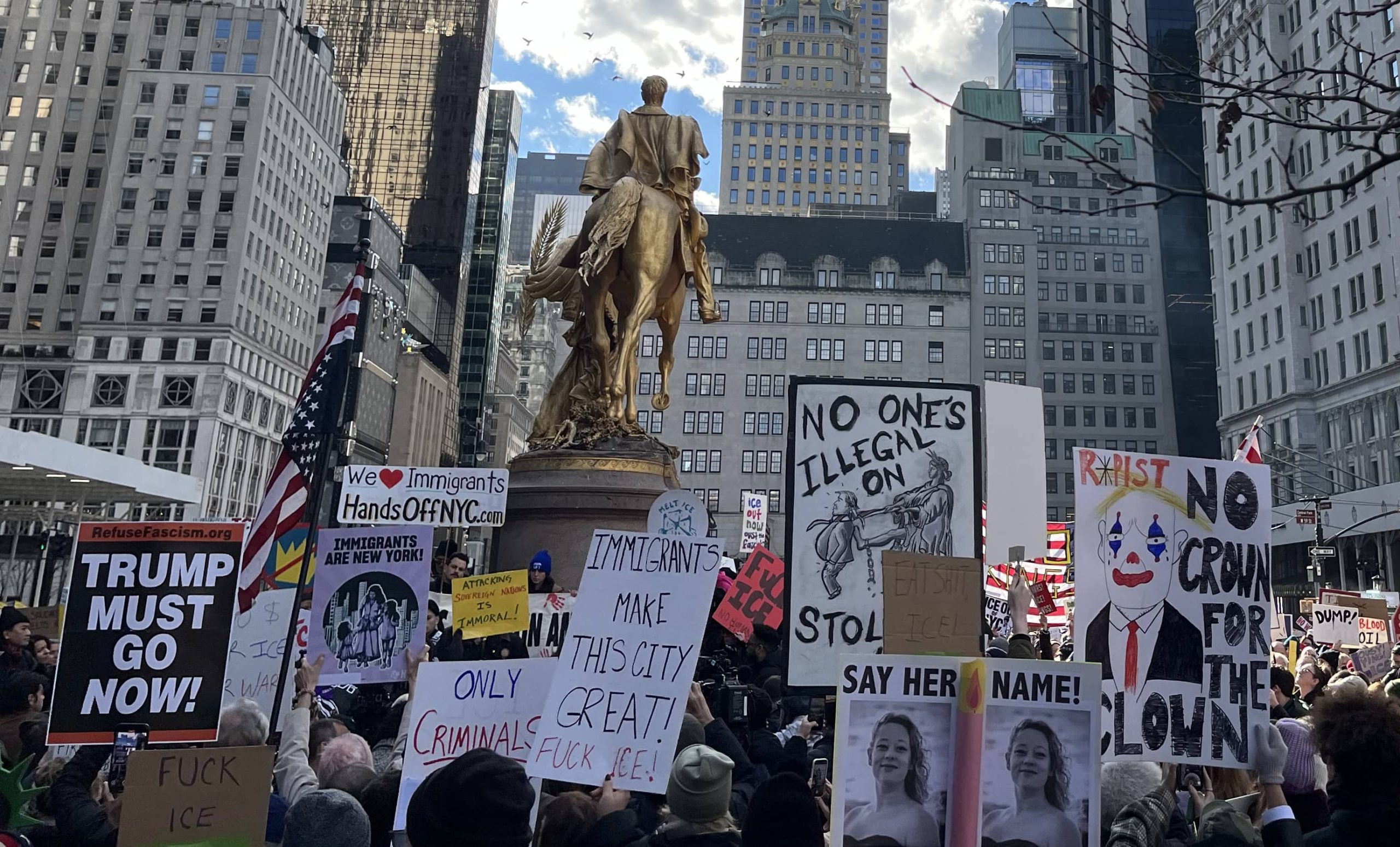
Yesterday, New York City joined protests around the country, standing with striking Minnesotans who have risen in the cold as a powerful anti-ICE voice. They represent a people’s resistance against the always escalating, harmful, militarized tactics of Homeland Security. The entire nation watched a federal agent shoot and kill Renee Good—a poet, mother, and citizen who refused to ignore the inhumane federal deportation operations in her Minneapolis neighborhood.  The president, and others in the administration and blamestream media, peddled the lie that Good was a domestic terrorist who was the cause of her own death. The person who clearly killed Renee Good was not a newly hired agent who lacked training: Jonathan Ross served more than 10 years in ICE’s elite Special Response Team.

While many agree that ICE (established less than 25 years ago) should be abolished, most Democrat leaders appear to be following the guidance of a “Don’t Say Abolish ICE” memo. Written by a former Customs and Border Protection official who is now a corporate consultant for the defense and surveillance sector, the memo advises reforming and retraining ICE. Fortunately, our new Mayor, Zohran Mamdani, remains strong in his stance. He stated on ABC’s, The View, “I am in support of abolishing ICE…We’re seeing a government agency that is supposed to be enforcing some kind of immigration law, but instead what it’s doing is terrorizing people”. 

Today’s newsletter reports on NYC’s now ex-mayor’s veto, just as he left office, of City Council legislation promoting immigrant and economic justice. We then offer an update on battles over Temporary Protective Status (TPS), including the good news of a recent court decision that reverses the Trump regime’s cancellation of protections for Nepali TPS holders. 

Newsletter highlights:
  1. Eric Adams vetoes immigrant justice in cruel exit act
  2. Temporary Protective Status (TPS) under attack: Update


1. Eric Adams’ Last Betrayal

“It is unsurprising that this mayor is ending his term by demonstrating, once again, that protecting and supporting working-class New Yorkers is not his priority. His vetoes put special interests above greater affordability and opportunity for hardworking New Yorkers, and public safety.” — Outgoing City Council Speaker Adrienne Adams

On his last day in office, Eric Adams—a mayor we have long criticized for scapegoating immigrants—vetoed three key pro-immigrant legislative packages that had been passed by large majorities in the City Council. The bills were among a total of 19 measures Adams vetoed, as a final New Year’s Eve “drop dead” to the lawmakers and the people of New York.

One of the vetoed packages aims to regulate and reform street vending. Among its provisions is the long-delayed raising of the cap on the number of vending licenses. Local Councilmember Shekar Krishnan had praised passage of the package as “a historic day for workers.” The legislation became urgent after Mayor Adams, who had promised to raise the cap and dial down punitive enforcement against vendors, made a quick 180-degree turn, joining with right-wing forces in a campaign to uproot and intimidate vendors in Corona Plaza, Roosevelt Avenue, and other parts of the city.

Another veto casualty was Tiffany Cabán’s Safer Sanctuary Act. This would outlaw the establishment of ICE offices on Rikers Island, something that has been contentious throughout Adams’ tenure. That act would also close a loophole in the city’s sanctuary laws, making it clear that the restrictions they place on cooperation with federal authorities would apply to all immigration enforcement agencies, not just ICE.

Adams’ third anti-immigrant veto gave a thumbs down to badly-needed legislation defending deliveristas from a wave of arbitrary “deactivations”—firings—initiated by delivery app companies. The Council measure requires that delivery workers be given a reason for deactivation, the right to appeal, and a 120-day notice before permanent deactivation.

According to city law, once the vetoes were formally registered, which happened on January 7, the Council has 30 days to override them, a process which requires a 2/3rds majority vote. The clock is ticking, with many other priorities competing for legislators’ attention in the new year.

New Council Speaker Julie Menin can strongly influence the fate of the vetoed bills, since she largely controls legislative scheduling and agendas. In practice, she seems unlikely to run out the clock on these three measures, which were all passed with “veto-proof “ majorities. For instance, the measure lifting the vendor license cap was passed by a margin of 39-9, as was the Safer Sanctuary Act. The bill defending deliveristas passed 40-8. Menin is a supporter of sanctuary laws, and was actually a co-sponsor of the street vendor bill.

However, Menin has refused to commit to overriding all of Mayor Adams’ vetoes, saying only that “the Council will consider next steps on these bills.”

NYC lawmakers have been given further impetus to act by ICE’s arrest of one of their own staffers, Venezuelan immigrant Andres Rubio Bohorquez, at a routine asylum interview. Menin and many other Council members have expressed concern and anger at ICE over the data analyst’s detention. This attack on one of their own employees is likely to concentrate the Council’s attention, bringing home how much is at stake for immigrants in their deliberations.

WHAT CAN WE DO?


2. The Ongoing Weaponization Of TPS

“The harm already caused by the administration’s cruel, lawless actions cannot be undone, but we are hopeful that, with this ruling, the new year will bring a measure of justice and peace to the TPS holder community.” —Jessica Bansal, attorney at the National Day Laborer Organizing Network (NDLON)

The new year started positively for Adhikaar, the Queens-based group that serves and supports the Nepali-speaking community in NYC. They shared welcome news that a Northern California District Court judge ruled that the Trump administration had illegally ended TPS for Honduras, Nepal, and Nicaragua. Adhikaar applauded the work of the National Day Laborer Organizing Network (NDLON) and other members of the National TPS Alliance who argued the legal case, which affects around 60,000 people nationwide, including thousands of Queens residents.

Ama Frimpong, the Legal Director of CASA, stated that the ruling clearly showed TPS cannot be terminated based on racialized political narratives. Frimpong continued, “This decision is not only a victory for TPS holders from Honduras, Nicaragua, and Nepal, but an encouraging signal for TPS holders from Venezuela, Cameroon, Afghanistan, and beyond who are fighting to protect their families and their futures.” 

Two days later, after US forces captured and removed the president of Venezuela, Homeland Security Secretary Kristy Noem announced that Venezuelans in the US under TPS had the opportunity to apply for refugee status. There was no hint as to how more than 600,000 people could do that when the US government has limited the total number of refugees per year to just 7,500. A few hours after her announcement, the Homeland Security eX-twitter account denied that Noem had ever said that, and instead reaffirmed that she had ended TPS for more than 500,000 people. The post suggested that, “now they can go home to a country that they love.” Even those Venezuelans who are happy about Maduro’s removal say returning is an extreme risk.

Minnesota has the largest Somali population in the US. Just days after a weekend of national protest in the wake of the ICE murder of Renee Nicole Good in Minneapolis, and Homeland Security’s brutal tactics in the Twin Cities, Trump announced the termination of TPS for Somalis. Ignoring the economic destabilization it will bring, he declared legal protections for Somali nationals enrolled in the TPS program will be ended in two months, on March 17. He claimed that country conditions had improved, an opinion easily contradicted by the work of Freedom House, which has monitored the state of global freedom for 85 years: currently, they give Somalia a Global Freedom Score of 8 out of 100; the US score is 84. 

The day after Trump’s Somalia announcement, the US Ninth Circuit Court of Appeals heard oral arguments for the second of the National TPS Alliance lawsuits, defending Haitians and Venezuelans. A Federal Judge has indicated she will not rule on the Haitian TPS case until February 6, which is just one day before that protection is set to expire. Just as the year began, and our article started with hope from NDLON, so these recent fraught weeks have ended with Ahilan Arulanantham, the Co-Director of UCLA’s Center for Immigration Law & Policy (CILP) stating, “We hope the court will insist the administration comply with the law as Congress intended it to by engaging in an objective assessment of the country conditions in Venezuela.” 

We wonder, is “hope” really enough?

WHAT CAN WE DO?

In solidarity and with collective care,

Jackson Heights Immigrant Solidarity Network (JHISN)


Follow @JHSolidarity on Facebook and Twitter and share this newsletter with friends, families, neighbors, networks, and colleagues so they can subscribe and receive news from JHISN. 
 

JHISN Newsletter 10/25/2025

Dear friends,

Rarely do we start with a set of asks, but extreme times give our newsletter a sense of urgency. So first, please take a few minutes to fill out our JHISN reader survey, and share how you might imagine and participate in neighborhood defense if escalated ICE raids land in central Queens. Thanks to all of you who have already responded.

Next, please check out and circulate this new state government portal to report disturbing or violent actions you witness by ICE and other federal agents in NYC; photos and videos can be uploaded to the site. The public portal was created by the NYS Attorney General one day after the militarized ICE attack on immigrant street vendors—and New Yorkers who came to their defense—on Canal Street this week. 

Our newsletter below looks more closely at the role of citizen immigrants, our own Jackson Heights-based organization DRUM Beats, and immigrant politics more broadly in Zohran Mamdani’s historic campaign for NYC mayor. And we give an update on the precarious situation affecting members of our Nepali community in Queens who have had their Temporary Protective Status terminated by the Trump regime—part of a larger campaign to rip away the legal status of hundreds of thousands of TPS holders nationwide. 

Newsletter highlights: 
  1. Zohran Mamdani: immigrant organizing boosts support for an immigrant mayor
  2. Update on cancellation of TPS for Nepali residents


1. Mamdani’s Campaign Success: Grassroots Immigrant Organizing

“[Trump] just threatened to have me arrested, stripped of my citizenship, put in a detention camp and deported. Not because I have broken any law but because I will refuse to let ICE terrorize our city.”—Zohran Mamdani

Jackson Heights group DRUM Beats, the sibling organization of Desis Rising Up and Moving (DRUM), was featured by many news organizations this year for its political advocacy work. You may have seen them last weekend at Jackson Heights Farmer’s Market doing henna tattoos, canvassing for Zohran Mamdani, and providing voting registration assistance. They are a major contributing factor to the success of Mamdani’s campaign to become the next, and first Muslim and South Asian, mayor of New York City, and, as he says himself, the first immigrant mayor in generations. DRUM Beats was one of the first grassroots groups to endorse him. Along with CAAAV Voice, the political arm of the CAAAV: Organizing Asian Communities, South Asian residents were engaged across all five NYC boroughs in support of Mamdani’s campaign. Turnout for the primary saw a 40% increase in South Asian voters for the Democratic Socialist candidate. This came less than a year after many of those same populations appeared to swing right by supporting Trump for president. One reason for Mamdani’s success is his showing up in person in their districts.

30% of the election districts won by Trump in 2024 supported Mamdani in the June 2025 Democratic primary. Many of those districts are in majority Asian neighborhoods. Indeed, across all immigrant-majority neighborhoods, Mamdani won by 7 points. New York Communities for Change has announced that a coalition of organizations representing 50,000 working-class Black and immigrant New Yorkers endorsed Mamdani. Make The Road New York officially endorses him, as does Congressmember Adriano Espaillat, an influential Latino leader for upper Manhattan and the Bronx. He also secured support from the head of the NYPD Bangladeshi American Police Association at a time when 13 other law enforcement organizations had backed the incumbent and former policeman, Mayor Adams, before he dropped out of the race. Despite having higher financial earnings than the working-class immigrants campaigning for Mamdani, many young, well-paid, white collar workers in New York’s tech sector are also giving him their support; they also worry about the affordability of life in the city. 

Mamdani, who worked as a housing counselor with the local immigrant services and housing support organization Chhaya CDC, does not include an “immigration” section on his campaign website. He clearly is a strong supporter of our sanctuary city status, but his platform emphasizes affordability, housing and food security, health, and education as the critical issues facing working-class populations. His policy memo about Trump-Proofing New York is not just about standing up to the ICE invasion, but about protecting all vulnerable New Yorkers from the multiplicitous attacks by Trump. During the first Mayoral debate last week, the topic of immigration and our sanctuary city laws was raised—Mamdani distinguished himself from the others by being more personal and talking of the horrific and ongoing abduction activities conducted by ICE at 26 Federal Plaza.

In private, Trump has indicated he thinks Mamdani is unbeatable. Trump has threatened to withhold federal money from New York if Mamdani is elected Mayor and has already moved forward to cut federal counterterrorism and transit funds. The president has stated that he will arrest Mamdani if he tries to stop masked ICE agents from deporting our neighbors. Trump, along with Tennessee Representative Andy Ogles, also questioned Mamdani’s citizenship. Ogles has been called out for censure for his bigoted and racist speech, including his letter asking the Justice Department to denaturalize and deport Mamdani. (Vickie Paladino, a Queens Council member, who also called for Mamdani to be deported, was met with minimal criticism from city officials and the current mayor.) After Mamdani won the Democratic primary, Tom Homan, Trump’s so-called Border Czar, said that ICE would double up and triple up agents in New York (and this week we watched New Yorkers defend their street vendors from ICE on Canal Street). 

These are the actions of authoritarians who will use any means, even if illegal, to silence and punish the people opposing their anti-democracy political dogma, which is hidden behind a show-of-force facade of nationalism and patriotism. Meanwhile, Mamdani was interviewed on Fox News and stated he will lead this city by building partnerships with people, and that he would do so, “not only in Washington, D.C., but [with] anyone across this country.” He has already proven he can do that by building a multi-asian coalition of support, which has expanded further and made him the current leader in the election polls.

WHAT CAN WE DO?
  • Be inspired by The Queensborough restaurant and organize a fundraising event for your favorite local immigrant-led support organization. After the No Kings March, The Q raised over $600 in cash for NICE (New Immigrant Community Empowerment).
  • Help DRUM Beats continue their political advocacy by making a financial donation. 

2. Brief History of TPS for Nepal, and Its Termination

As of 2023, there were more than 200,000 Nepalis in the US, with almost 17,000 living in Jackson Heights, many with Temporary Protective Status (TPS). As of October 2025, more than 12,000 Nepalis residing in the US–some of them our neighbors here in Queens–have had their legal TPS status abruptly canceled by the Trump administration. 

TPS was created by the Immigration Act of 1990, and grants permission for people to stay in the US if conditions in their country are unsafe from a natural disaster, an armed conflict, or some other unusual and temporary situation making it unsafe for people to return. TPS protects people from deportation, and they can be authorized to work in the US. TPS is granted for 18 months, and at the end of that time it can be extended or revoked for another 6, 12, or 18 months. At least 60 days before the period ends, the Secretary of Homeland Security must review conditions in the target country and publish the decision in the Federal Register.

In April 2015, there was a 7.8 magnitude earthquake in Nepal, followed by several strong aftershocks. There was extensive damage throughout the country: 755,000 homes were damaged; 9,000 people died and 22,000 were injured. That is why TPS was granted for Nepalis residing in the US until June 2018. Then, in 2017, serious flooding and landslides impeded food production and reconstruction of the earthquake damage. As a result of two separate court cases (Bhattarai v. Nielsen and Ramos v. Nielsen), TPS for Nepal was extended three times until June 2024. 

However, in 2018, Trump revoked the TPS status for Nepal, which was quickly challenged in court. Then, in 2023, DHS under Biden rescinded that termination and extended TPS until June 2025. On June 6, 2025, DHS Secretary Noem terminated TPS for Nepal, effective August 5, 2025. She claimed “there are notable improvements in environmental disaster preparedness and response capacity, as well as substantial reconstruction from the earthquake’s destruction such that there is no longer a disruption of living conditions and Nepal is able to handle adequately the return of its nationals.”

In July 2025, the National TPS Alliance and individual plaintiffs with TPS status challenged Secretary Noem’s actions as arbitrary and capricious, failing to provide the required 60-day notice, and violating the equal protection portion of the Fifth Amendment because the motivation was partially racial animus. On July 31, US District Judge Trina Thompson granted the plaintiffs’ motion to postpone the cancellation. The court ordered that TPS remain in effect until at least November 18, 2025. But on August 20, 2025, the District court’s stay was overridden by the Ninth Circuit Court of Appeals, allowing TPS cancellation for Nepal, Honduras, and Nicaragua to go forward. 

Meanwhile, in September 2025, there was a political crisis in Nepal when economic dysfunction and disillusioned youth led to widespread protests, government buildings burned, a national curfew, and finally the installation of a new president, Sushila Karki, the first woman president of Nepal.

It is not clear if that political crisis will have any bearing on the status of Nepalis in the US. With the removal of work authorization and the threat of deportation the Nepali community is in danger.

WHAT CAN WE DO?
  • Make a donation to our local immigrant-led organization Adhikaar which represents the Nepali-speaking community. 


In solidarity and with collective care,

Jackson Heights Immigrant Solidarity Network (JHISN)

Follow @JHSolidarity on Facebook and Twitter and share this newsletter with friends, families, neighbors, networks, and colleagues so they can subscribe and receive news from JHISN. 


JHISN Newsletter 07/26/2025

Dear friends,

Like many of you, we find ourselves at risk of being overwhelmed every week, sometimes daily, by immigration news. Much of it bad and some of it almost unbelievable. We continue to publish our monthly newsletter with a local focus whenever we can—looking at both the forces aligning against immigrant lives, and those allied with solidarity, resistance, and community-based care. None of it makes any sense without you, our readers, taking this news and acting when and where you can, for immigrant justice and power. Thank you for continuing to read the newsletter—and for using it as a tool in our common struggle.

Today’s issue takes on systematic wage theft—disproportionately experienced by immigrant workers—while highlighting how common it is in our own neighborhood. The newsletter also returns to the urgent issue of the Trump regime’s attempts to cancel Temporary Protective Status (TPS) for hundreds of thousands of legal immigrant US residents, including many in the Nepali community here in Queens.  

Newsletter highlights:
  1. Wage theft is all around us
  2. Temporary Protective Status (TPS) under assault: an update


1. Wage Theft is All Around Us

Wage theft is rampant in industries that employ large numbers of immigrant workers. These include agriculture, building maintenance, garment assembly, hotel, restaurant and food service, construction, nursing homes, nail salons, warehouses and car washes. Inequality.org states the obvious: “Undocumented workers are particularly vulnerable to wage theft as they are often the least likely to report violations due to fear of retaliation, job loss, or exposure of their immigration status.” This has become an even more pressing consideration as the terror of the Trump regime’s mass deportation accelerates.

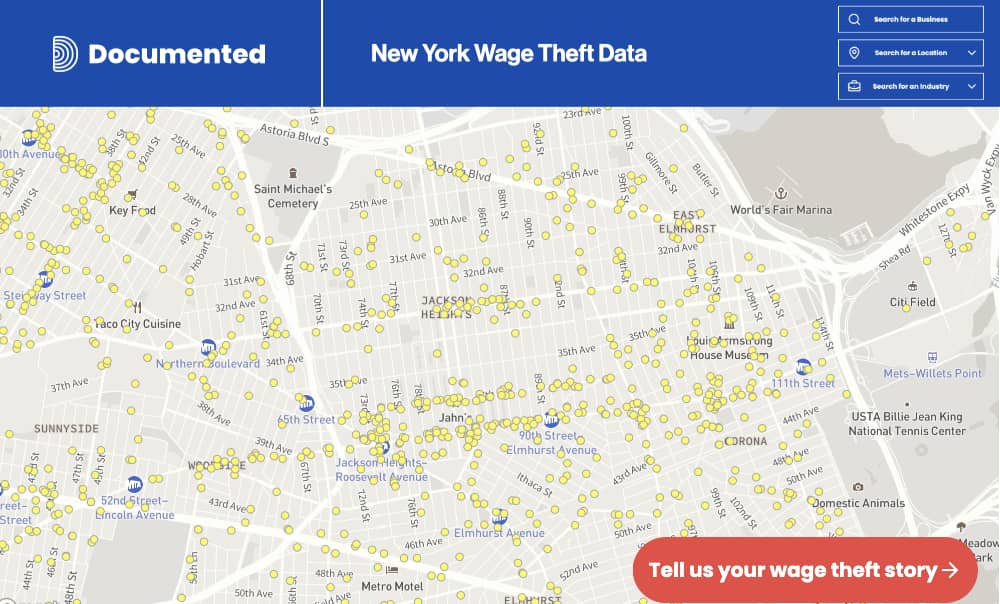
The Center for Popular Democracy reports that “An estimated 2.1 million New Yorkers are victims of wage theft annually, cheated out of a cumulative $3.2 billion in wages and benefits.” Wage theft among New York City’s 300,000 low-wage workers is reported to be roughly $18.4 million per week. The widespread nature of wage theft in the state and city can be visualized by clicking on Documented’s Wage Theft Monitor. The Monitor is based on state and federal data acquired through Freedom of Information requests. It records thousands of final wage theft settlements—large and small, in every neighborhood—including hundreds of findings against businesses in our area. 

Examples of wage theft in Queens alone seem endless:

  • In 2020, Desis Rising Up and Moving (DRUM) organized a large protest outside Sona Chaandi, one of the largest jewelry stores on 74th Street. Demonstrators accused the owners of sexual harassment, as well as wage theft. Nargis, an immigrant DRUM member and former employee, told the rally that she was harassed, paid $50 to $75 for 10 hour days, and forced to take care of the owner’s elderly parent without pay. The Documented Wage Theft Monitor shows that Sona Chaandi was eventually ordered to pay $65,000 to two unnamed workers.
  • Some local eating and drinking establishments with immigrant work forces have faced large wage theft settlements. El Picosito Bar on Roosevelt was ordered to pay $237,621 to 10 workers a few years back. La Boina Roja Steakhouse was recently ordered by the state to pay $221,130 to 11 workers, according to the Wage Theft Monitor. National chain restaurants are also implicated. For instance, Chipotle on Northern Boulevard was ordered to reimburse 85 workers in a wage theft case filed in 2023.
  • In 2022, Attorney General Letitia James announced a settlement of more than $90,000 in favor of several Astoria laundry workers. The Laundry Workers Center, which primarily represents immigrant women of color, did the initial investigation on the case and pushed it to the AG’s office.
  • That same year, James also won a $130,000 settlement for two building superintendents in Flushing who were paid no wages at all—the owners had decided that a rent-free apartment would serve as their only compensation.
  • Last year, Make the Road New York was instrumental in publicizing and filing a disturbing wage theft complaint by Ecuadorian migrants at a tobacco packaging factory in Queens. Workers assert that they were paid about $4 an hour, working in sweatshop conditions 10-13 hours a day, seven days a week.
  • This summer, Assemblymember Shekar Krishnan took the lead in trying to terminate lucrative city contracts handed out to Griffin’s Landscaping, a firm accused of repeated wage theft and other illegal behavior.

Unfortunately, many ripped-off immigrant workers never get a legal settlement, or any kind of justice. Even those bold enough to file complaints with state or federal authorities face an uphill struggle. They may win their cases, which often take years, and yet the employer stalls, refuses to pay the judgement, hides, or declares bankruptcy.

“Hildalyn Colón Hernández, deputy director of New Immigrant Community Empowerment, a New York-based worker advocacy organization, said, ‘Employers are operating with no consequences’….Colón Hernández added that her organization now trains its employees on how to investigate wage theft because it would take too long if they had to rely on federal or state investigators to recover back wages.”  —ProPublica, 8/22/23

WHAT CAN WE DO?

2. The Impact of TPS Changes for NY

“The law is very clear that once the TPS extension has been granted, it cannot be taken away en masse. This is the first time in the 35-year history of the TPS statute that anyone’s ever tried to do that.” –Ahilan Arulanantham, co-director, Center for Immigration Law and Policy, UCLA School of Law

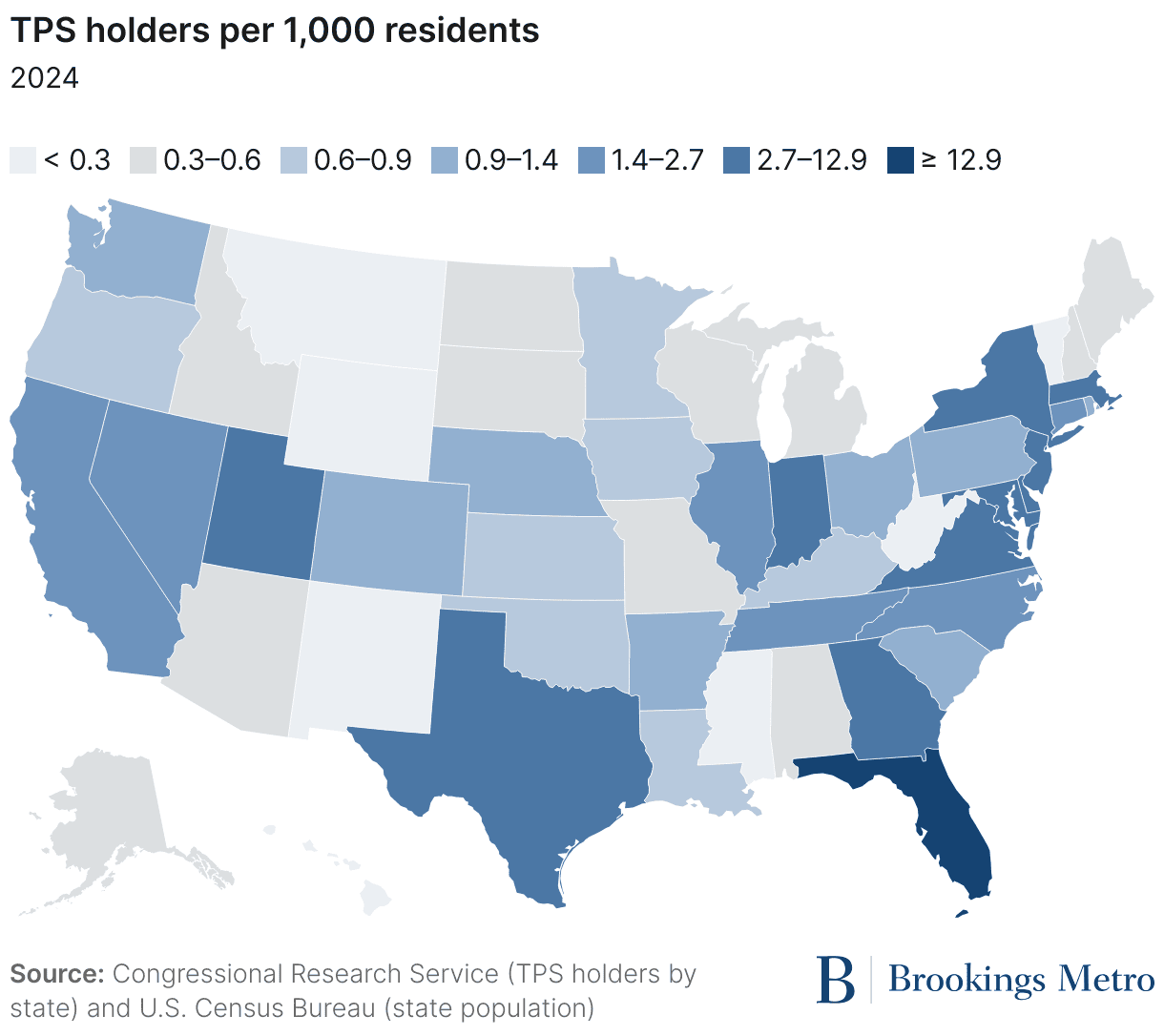
The Brookings Institute warned that Trump’s campaign promises targeting immigrants “would have disproportionate impacts on U.S. cities and urban areas, given that most foreign-born individuals live and work in these places.” Among US counties with undocumented populations, Queens is ranked the sixth-largest and has over three TPS holders per 1,000 people. (With a population of about 2,250,000, that amounts to over 6,750 TPS holders.) The Trump regime, led by Stephen Miller’s hard-line propaganda, aims to abruptly end TPS status for hundreds of thousands of US residents, which disproportionately threatens people living here in Queens and NYC.  

About 40% of the migrants who arrived in NY in 2022-23 came from Venezuela under TPS protections. New York City has the second-largest TPS-eligible Haitian population in the nation, which comprises about 3% of the city’s population. Among other TPS recipients, New York City also has the largest Honduran population and, residing in both Woodside and Jackson Heights is the second-largest Nepali migrant population in the country. Around Flushing and Kew Gardens, there is a large population of Afghan immigrants in Queens. 

These groups combined comprise 87,000 TPS holders in New York state who are specifically under threat from the questionable legal actions spearheaded by the Trump administration to strip their legal authorization to remain and work in the US, making them all detainable and deportable. The inappropriately named One Big Beautiful Bill, which barely received enough votes to become law, supplements these attacks by requiring higher fees for individuals to submit forms necessary to file in court to fight against potential deportation. The Showcase of Nepalis in New York (NepYork) published the full details of these cost increases. NepYork also reported on a recent NJ event organized to discuss increased deportation threats and the imminent termination of TPS for Nepalese immigrants. 

“TPS is ending on August 5 [for Nepal], and thousands of lives are hanging by a thread. We organized this not just because the law is changing, but because our families are suffering silently. Many don’t know their rights. Many are scared. We have organized this event to help them find a way and let them know they are not alone.” Dr. Bishnu Maya Pariyar, Program Director at Hudson S.P.E.A.K.S.

Pushback against TPS terminations includes Maryland Senator Chris Van Hollen’s SECURE Act, introduced last month along with 30 other senators. The bill would secure a pathway to permanent residency and is supported by numerous unions, CASA, the National TPS Alliance, and the National Network for Arab American Communities. Additionally, in February, the Dream and Promise Act was resubmitted—a bipartisan bill supported by nearly 200 representatives that would protect DACA recipients as well as TPS holders.  

On Monday, July 28, Queens Borough President Donovan Richards will hold a rally at 6:00 PM at Queens Borough Hall to support community members who are deeply affected by the terminations of Temporary Protected Status. Haitian-American City Councilmember Farah Louis has also spoken out against the efforts to end TPS. She notes that people fled their dangerous home countries, came here for a better life, they work for local businesses, and invest in the economy here—and now all that is about to be snatched away. Brad Lander, the NYC Comptroller, has published Protecting Our Neighbors, describing the humanitarian costs of cancelling TPS. His report also highlights the defunding by the Trump and Adams administrations of vital legal services used to protect over 1,800 children whose lives will be disrupted by this change.

Hundreds of thousands of TPS recipients, along with family members and supporters, await the outcome of the numerous challenges made in court by the National TPS Alliance, CASA, Haitian Americans United Inc., and the Haitian Evangelical Clergy Association as the clock ticks down towards deadlines that threaten to end their legal status. 

Country Designation Date Most Recent Action Expiration Date # Individuals
Afghanistan* May 20, 2022 Termination (5/13/25) July 14, 2025 11,700
Cameroon* June 7, 2022 Termination (6/4/25) August 4, 2025 5,200
Haiti* Jan. 21, 2010 Termination (7/1/25) Sept. 2, 2025 348,187
Honduras* Jan. 5, 1999 Termination (7/8/25) Sept. 8, 2025 72,000
Nicaragua* Jan. 5, 1999 Termination (7/8/25) Sept. 8, 2025 4,000
Nepal* June 24, 2015 Termination (6/6/25) August 5, 2025 12,700
Venezuela* Oct. 3, 2023 (re-designation) Termination (2/5/25) Not applicable 348,202

Table compiled by bhfs 7/22/2025
* Asterisks denote ongoing litigation 

WHAT CAN WE DO?
  • Local group DRUM has been organizing for 25 years and supports the Nepali population under threat from TPS terminations. Join their 25×25 campaign and have 25 of your own contacts donate $25 to support their work.
  • The National TPS alliance includes, among others, the National Day Laborer Organizing Network (NDLON), Adhikaar and the Haitian Bridge Alliance. If you are able, consider donating to any or all of these organizations.
  • Attend the rally this Monday, July 28, at 6pm at Queens Borough Hall to demand continued TPS protections for immigrant neighbors. 


In solidarity and with collective care,

Jackson Heights Immigrant Solidarity Network (JHISN)


Follow @JHSolidarity on Facebook and Twitter and share this newsletter with friends, families, neighbors, networks, and colleagues so they can subscribe and receive news from JHISN.