Dear friends,
We often struggle to decide what stories to write for the newsletter: how to choose from the cascade of immigration news; what will promote solidarity without softening the brutal reality of what is happening in the US. For this newsletter, it was easy to decide that we had to report on a recent violent ICE arrest here in Jackson Heights. And then focus on the ugly consequences for New York’s health care system because of the cancellation of Temporary Protected Status (TPS) for Haitians.
For a deeper and wider dive into news about, for, and by immigrants, please keep the NYC-based online news outlet Documented on your ‘must read’ list. They do an extraordinary job keeping us informed and promoting an immigrant-centered and social justice lens.
Finally, to supplement our story about Haitians losing TPS status, see this report on how one senior living center in California is already being affected by the forced exodus of Haitian health care workers.
Newsletter highlights:
- ICE unleashed in Jackson Heights
- Threats to Haitians and the NY health care system
1. How ICE Is Coming To Our Streets—Again.
“We are horrified by federal immigration enforcement operations that deliberately infringe upon First Amendment rights to assemble and dissent. The use of intimidation, surveillance, and deadly force against lawful protestors is not public safety—it is repression.” —Statement from the League of Women Voters on Federal Immigration Enforcement and the Erosion of Constitutional Rights, January 2026
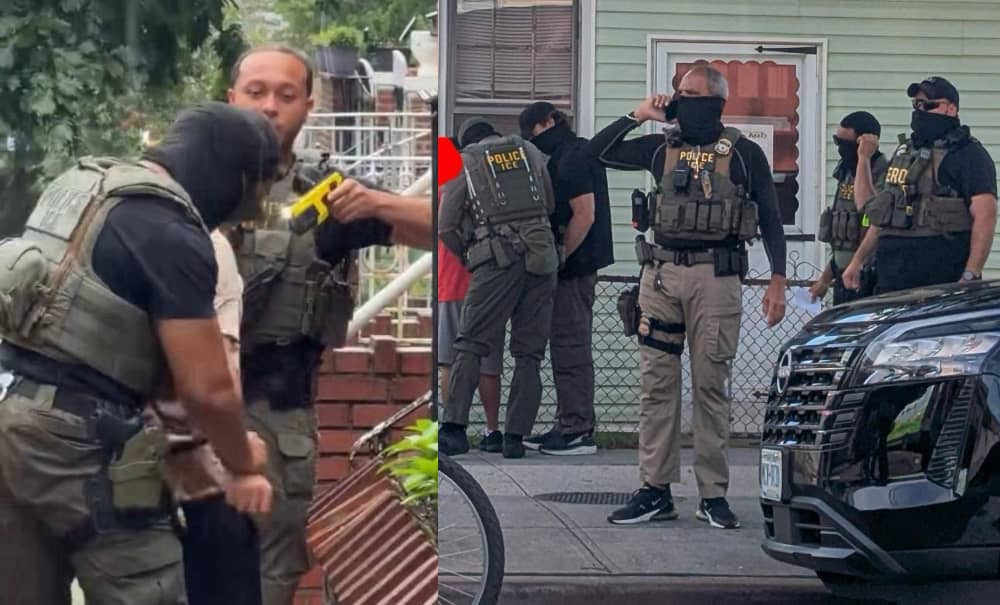
Five blocks away from the Jackson Heights Shopping Center on 31st Avenue, a woman walked. Protected from the rain by an umbrella. She noticed two ICE agents grabbing the arms of a man on the street about 20 feet in front of her. She crossed the road to avoid walking directly past them. The agents had tactical vests with POLICE ICE patches velcroed on the front and back. They carried holstered guns. Handcuffs dangled from their belts. One was illegally masked with a neck gaiter covering his mouth and secured over his ears by his own black baseball cap: its brim was angled low, allowing only the strip of his face with his eyes to be seen. The other agent was unmasked. The man was not struggling. The masked agent forcefully grabbed the man’s wrists; the man’s body twisted in reaction, and he struggled to maintain balance. There was no threat in his struggle. The agents’ lives were not in peril. Yet the unmasked agent chose to raise his left arm nonchalantly, without any urgency or need to defend himself, and aimed a taser inches from the man’s chest: violating recommended considerations for taser deployment by law enforcement. His verbal direction while pointing the taser was minimal and vague: “Cut the shit.” The two agents walked the man to a Black Hyundai Palisade SUV, LZW 7506. Nothing more is seen of them. This was July 9th in Jackson Heights.
Using the SALUTE reporting method, this 90-second encounter would be reported as:
S: 2
A: Arrested a man
L: 81st Street and 31st Avenue
U: ICE
T: 5:14 pm
E: Tan ICE vests, masked, taser
The only reason we even have this information is because a Rapid Response (RR) group member was walking the streets, paying attention to and legally documenting the actions of ICE agents. After the man was taken away, an RR team located a family connection for the man. Because of that volunteer work, the family would now know what happened to him. (The same RR team is currently searching to locate a family contact for someone else recently taken from 108th Street at 45th Avenue.) Since the federal government is not informing people when they move ICE detainees, how else would this information be discovered?
The critical work for any RR action is to establish communication with the person being targeted. Let them know you’re there to help them, ask them for a phone number of a family member or contact that you can call to tell what has happened to them, or any information to help know more about them. The faster an ID can be made, the faster legal support can be gathered.
The June 2026 budget reconciliation bill that ended the US government shutdown and funded Homeland Security for three more years “did not include basic guardrails like required oversight for detention, transparency measures requiring ICE to provide basic detention data to the public, and some basic civil rights protections in immigration enforcement.” It also gave $350 million for ICE to carry out enforcement actions in cities or states DHS decides are “non-cooperating” with Trump’s mass deportation agenda. It allows people to be taken by ICE if they were arrested for minor offenses, and ICE can also take someone if they were ever charged with the federal offense of unauthorized entry, even if charges were later dropped.
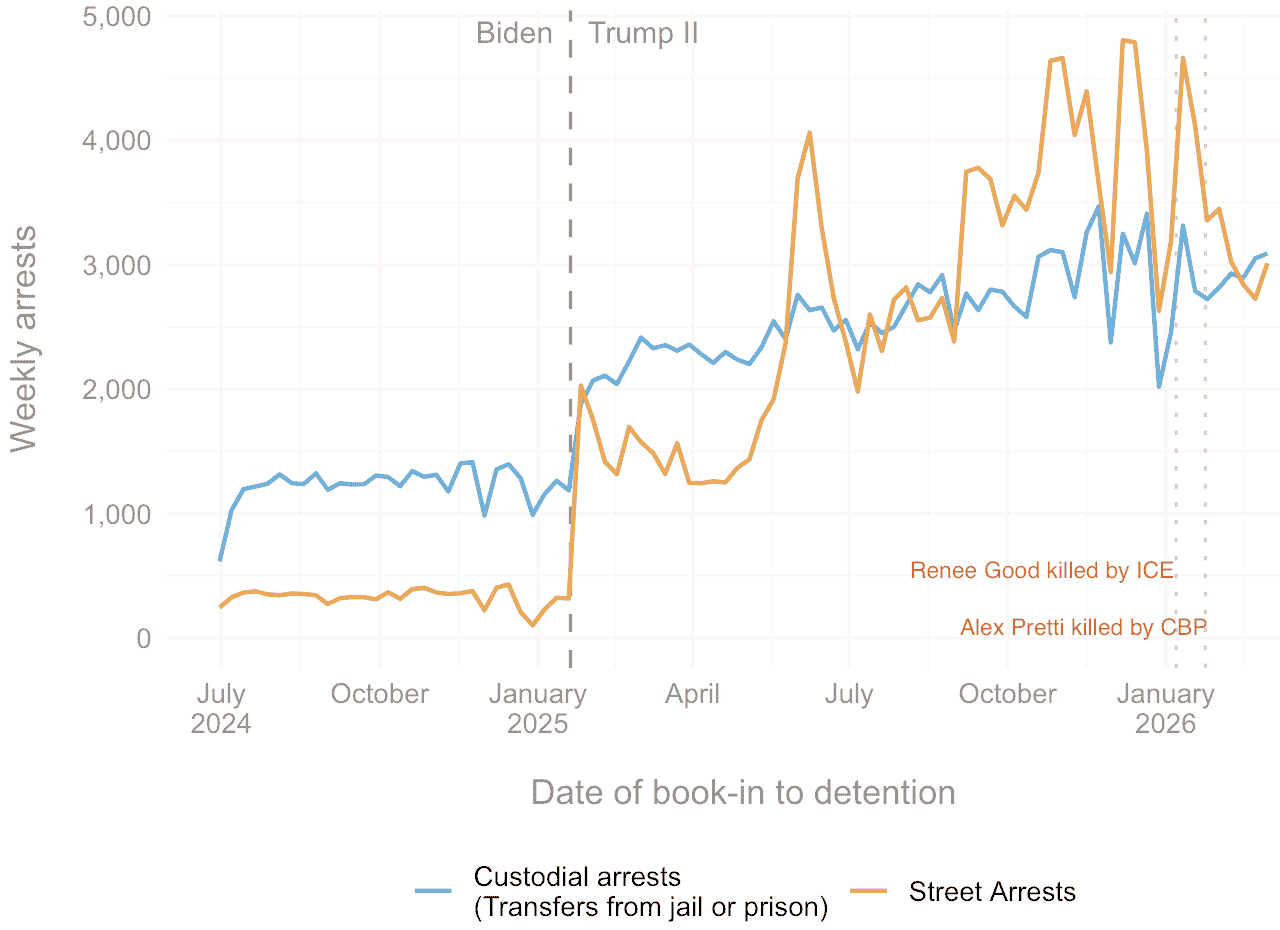
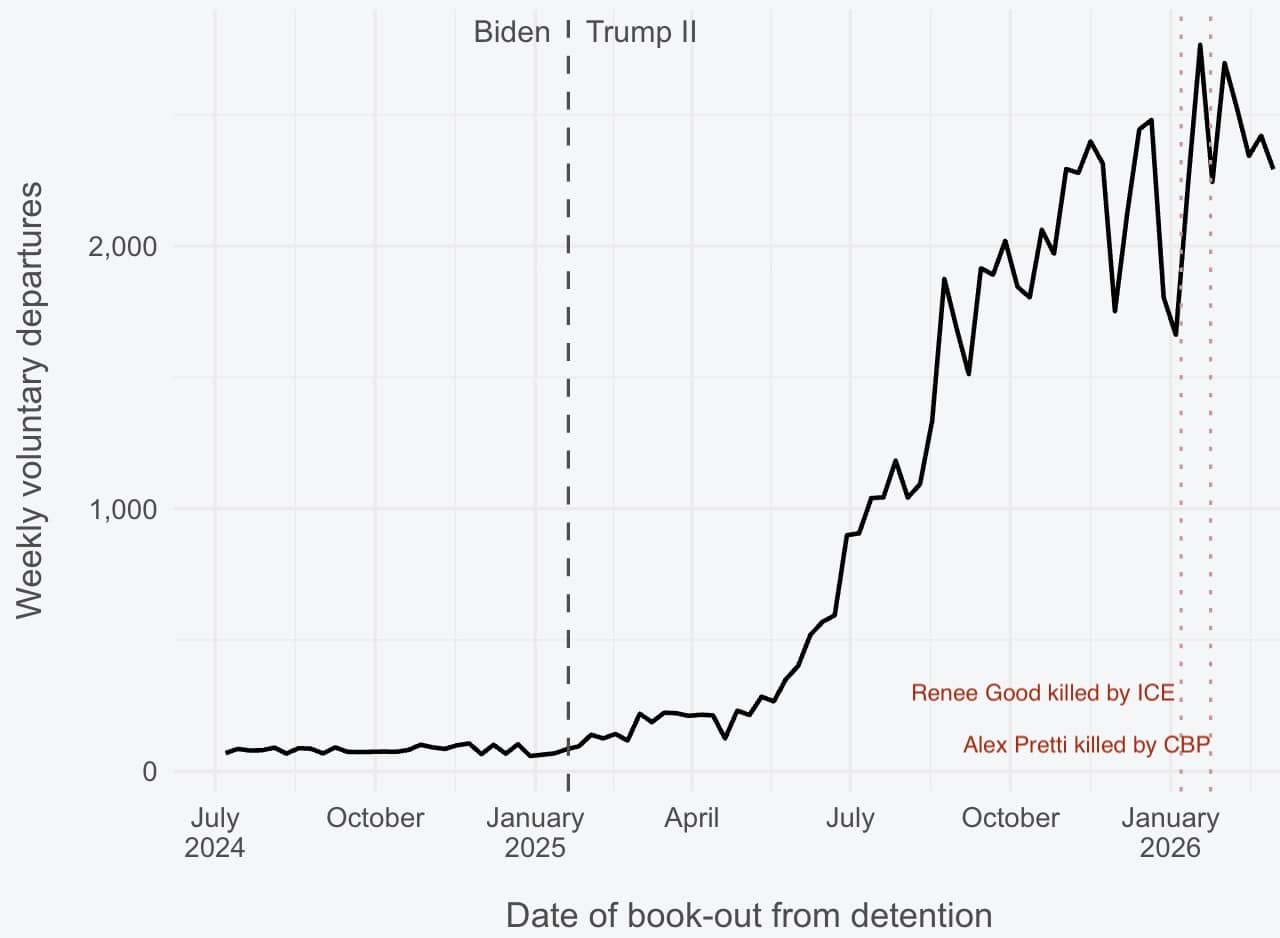
When Markwayne Mullin replaced Kristy Noem as DHS secretary, he said his key goal was to not be the lead story every single day. Yet, his team continues to murder people publicly and blame the victims with impunity. Mullin’s public response when asked how his agents would be held accountable was to say DHS will “turn up the heat on the streets”. The FBI has recently announced it will no longer take the lead on “assault on a federal officer” cases involving ICE and other Department of Homeland Security agents. Instead, Homeland Security Investigations will be responsible. Since the start of the second Trump presidency, no officers have been charged in any of the 9 killings by agents, and the federal government has suggested state prosecutors don’t have jurisdiction to investigate federal officers.
In summary: we can expect more on-the-street ICE activities and will see no change in tactics regarding overtly harsh enforcement techniques of non-criminal immigrants. We can anticipate more murders of anyone in proximity to ICE activities, and no independent agency will hold accountable the agents who kill. We will continue to see an increase in protesters being charged falsely with the once-obscure 18 U.S.C. 111 statute, which makes it a federal crime to assault or forcibly impede a government officer. We therefore need more people mobilized in Rapid Response groups to stand up for the disappeared as well as for our constitutional rights.
WHAT CAN WE DO?
- Participate in neighborhood walks for a Rapid Response group in these key areas:
- 1-2 block radius of any 7 train stop in the area (Jackson Heights, Elmhurst, Corona)
- Most of Corona south of Northern Blvd. to just south of Corona Ave.
- All along 111th, 108th streets
- 1-2 block radius of the Ideal Supermarket by Corona Ave at 102nd street
- Along 45th Ave., the LIRR underpass
- Eastern side of Jackson Heights closer to Corona
- North of Northern Blvd. along 31st/32nd Aves.
- Staging sites: FMCP parking lots, QCM parking lots, parking lots along Northern Blvd./Queens Blvd.
- Do what you can to help the Legal Defense Fund achieve their “6 Steps to End ICE and Other Federal Law Enforcement Abuses in Our Streets”
- Support efforts to enforce gambling laws against prediction markets which profit from their speculations on ICE arrests.
2. Loss of TPS for Haitians Endangers New York’s Healthcare System
“During COVID, we knew we were exposed. We knew we could be the next one, but guess what? We showed up every day. Some of us lived in the hospital for months. And this is how we are being repaid.” —Dr. Marie Paul, founder of Haitian Nurses Network
In November 2025, then Secretary of Homeland Security Kristi Noem declared that Temporary Protective Status (TPS) for Haitians would end on February 3, 2026, but on February 2, a US District Court for the District of Columbia put a stay on that decision. On June 25, the Supreme Court removed the stay, permitting the administration to remove TPS for Haitians and Syrians. The decision put 350,000 Haitians and 6,100 Syrians in danger of deportation. The decision disregarded the continuing chaos in Haiti. It also invites turbulence in New York State’s health care system where thousands of Haitians currently work.
The court decision was not effective immediately. A 32-day delay is required before actions can take place, so on July 10, US Citizenship and Immigration Services (USCIS) announced that the current work permit expiration date for Haitians with TPS is July 24, 2026. The state has about 56,000 Haitian residents; the city has around 5,400. The most obvious consequences of the court’s decision are the total disruption of Haitian families’ lives and well-being as well as their inability to send money to relatives in their country of origin. Another serious consequence is economic damage. Nationwide, Haitian TPS holders contribute $5.9 billion to the US economy, including $1.1 billion to New York state and $281 million in federal, state and local taxes.
Additionally, the health care industry will be severely disrupted. Thousands of Haitians provide essential care as nurses and nursing assistants across New York’s hospitals, as home health aides to the elderly, and as caregivers in long-term care facilities. All their patients and clients will be severely affected if Haitians are unable to continue working.
According to an amicus brief filed in April by Letitia James and 18 other state attorneys general, there are tens of thousands of Haitian TPS holders nationwide who work in critical services including health care. The American Immigration Council states that 112,000 Haitians work nationwide in health care, including 58,000 home health aides.
The policy group FWD.us estimates there are 25,000 Haitian TPS holders working in New York state, including 5,000 caregivers and 2,000 nursing assistants who, along with other workers, contribute $141 million annually in state and local taxes.
It is well-known that there is a nursing shortage in New York City, and the loss of these TPS holders will only increase the problem.
“Even with the current numbers that they have, including TPS workers, there is still a nursing shortage. Removing even a small percentage of these people will further impact our ability to provide quality care. There is no replacement pipeline. That’s why I’m losing sleep. My concern is, what happens to patients?” —Dr. Cherlie Magny-Normilus, a family nurse practitioner and assistant professor of nursing at New York University
There are efforts in Congress to alter these consequences. In April, the House passed a bill with bipartisan support to extend TPS protection for Haitians for three years. After the Supreme Court ruling, Senators Sheldon Whitehouse and Jack Reed presented Senate bill S.4814 to extend TPS for Haitians, and on July 6 Representative Mike Lawler (NY-17), a strong advocate for Haitians in his district, urged the Senate to take up the bill.
In the meantime, some families threatened with deportation may stop going to work, avoid school or public spaces, or withdraw from daily life because of ICE fears. For TPS holders, the main option now is to check for any other form of immigration relief and to start concrete planning in case TPS ends.
WHAT CAN WE DO?
- Tell your senators to vote for Senate bill S.4814.
- Donate to Haitian Bridge Alliance or to the National TPS Alliance.
In solidarity and with collective care,
Jackson Heights Immigrant Solidarity Network (JHISN)
Follow @JHSolidarity on Facebook and Twitter and share this newsletter with friends, families, neighbors, networks, and colleagues so they can subscribe and receive news from JHISN.