Tag: Letitia James

JHISN Newsletter 07/25/2026

Dear friends,

We often struggle to decide what stories to write for the newsletter: how to choose from the cascade of immigration news; what will promote solidarity without softening the brutal reality of what is happening in the US. For this newsletter, it was easy to decide that we had to report on a recent violent ICE arrest here in Jackson Heights. And then focus on the ugly consequences for New York’s health care system because of the cancellation of Temporary Protected Status (TPS) for Haitians.  

For a deeper and wider dive into news about, for, and by immigrants, please keep the NYC-based online news outlet Documented on your ‘must read’ list. They do an extraordinary job keeping us informed and promoting an immigrant-centered and social justice lens.

Finally, to supplement our story about Haitians losing TPS status, see this report on how one senior living center in California is already being affected by the forced exodus of Haitian health care workers.

Newsletter highlights:
  1. ICE unleashed in Jackson Heights
  2. Threats to Haitians and the NY health care system


1. How ICE Is Coming To Our StreetsAgain.  

“We are horrified by federal immigration enforcement operations that deliberately infringe upon First Amendment rights to assemble and dissent. The use of intimidation, surveillance, and deadly force against lawful protestors is not public safety—it is repression.” Statement from the League of Women Voters on Federal Immigration Enforcement and the Erosion of Constitutional Rights, January 2026

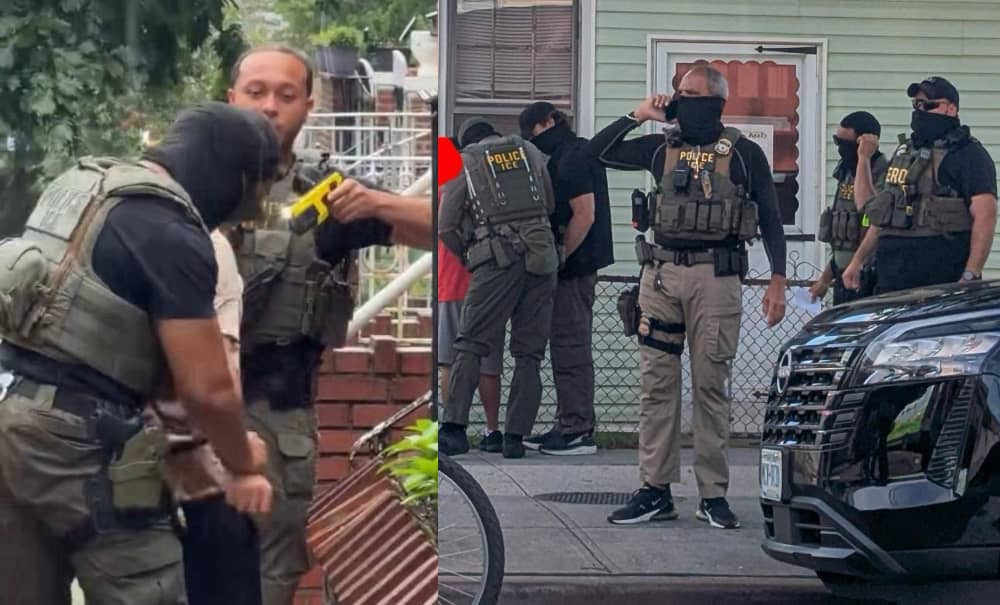
Five blocks away from the Jackson Heights Shopping Center on 31st Avenue, a woman walked. Protected from the rain by an umbrella. She noticed two ICE agents grabbing the arms of a man on the street about 20 feet in front of her. She crossed the road to avoid walking directly past them. The agents had tactical vests with POLICE ICE patches velcroed on the front and back. They carried holstered guns. Handcuffs dangled from their belts. One was illegally masked with a neck gaiter covering his mouth and secured over his ears by his own black baseball cap: its brim was angled low, allowing only the strip of his face with his eyes to be seen. The other agent was unmasked. The man was not struggling. The masked agent forcefully grabbed the man’s wrists; the man’s body twisted in reaction, and he struggled to maintain balance. There was no threat in his struggle. The agents’ lives were not in peril. Yet the unmasked agent chose to raise his left arm nonchalantly, without any urgency or need to defend himself, and aimed a taser inches from the man’s chest: violating recommended considerations for taser deployment by law enforcement. His verbal direction while pointing the taser was minimal and vague: “Cut the shit.” The two agents walked the man to a Black Hyundai Palisade SUV, LZW 7506. Nothing more is seen of them. This was July 9th in Jackson Heights.

Using the SALUTE reporting method, this 90-second encounter would be reported as:

S: 2
A: Arrested a man
L: 81st Street and 31st Avenue
U: ICE
T: 5:14 pm
E: Tan ICE vests, masked, taser

The only reason we even have this information is because a Rapid Response (RR) group member was walking the streets, paying attention to and legally documenting the actions of ICE agents. After the man was taken away, an RR team located a family connection for the man. Because of that volunteer work, the family would now know what happened to him. (The same RR team is currently searching to locate a family contact for someone else recently taken from 108th Street at 45th Avenue.) Since the federal government is not informing people when they move ICE detainees, how else would this information be discovered? 

The critical work for any RR action is to establish communication with the person being targeted. Let them know you’re there to help them, ask them for a phone number of a family member or contact that you can call to tell what has happened to them, or any information to help know more about them. The faster an ID can be made, the faster legal support can be gathered. 

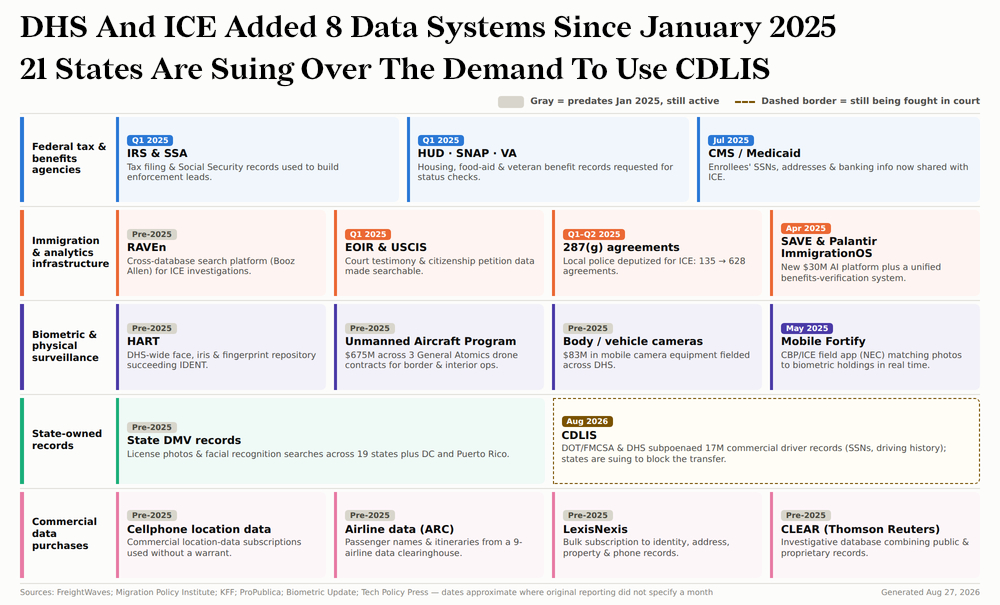
The June 2026 budget reconciliation bill that ended the US government shutdown and funded Homeland Security for three more years “did not include basic guardrails like required oversight for detention, transparency measures requiring ICE to provide basic detention data to the public, and some basic civil rights protections in immigration enforcement.” It also gave $350 million for ICE to carry out enforcement actions in cities or states DHS decides are “non-cooperating” with Trump’s mass deportation agenda. It allows people to be taken by ICE if they were arrested for minor offenses, and ICE can also take someone if they were ever charged with the federal offense of unauthorized entry, even if charges were later dropped.

When Markwayne Mullin replaced Kristy Noem as DHS secretary, he said his key goal was to not be the lead story every single day. Yet, his team continues to murder people publicly and blame the victims with impunity. Mullin’s public response when asked how his agents would be held accountable was to say DHS will “turn up the heat on the streets”. The FBI has recently announced it will no longer take the lead on “assault on a federal officer” cases involving ICE and other Department of Homeland Security agents. Instead, Homeland Security Investigations will be responsible. Since the start of the second Trump presidency, no officers have been charged in any of the 9 killings by agents, and the federal government has suggested state prosecutors don’t have jurisdiction to investigate federal officers.

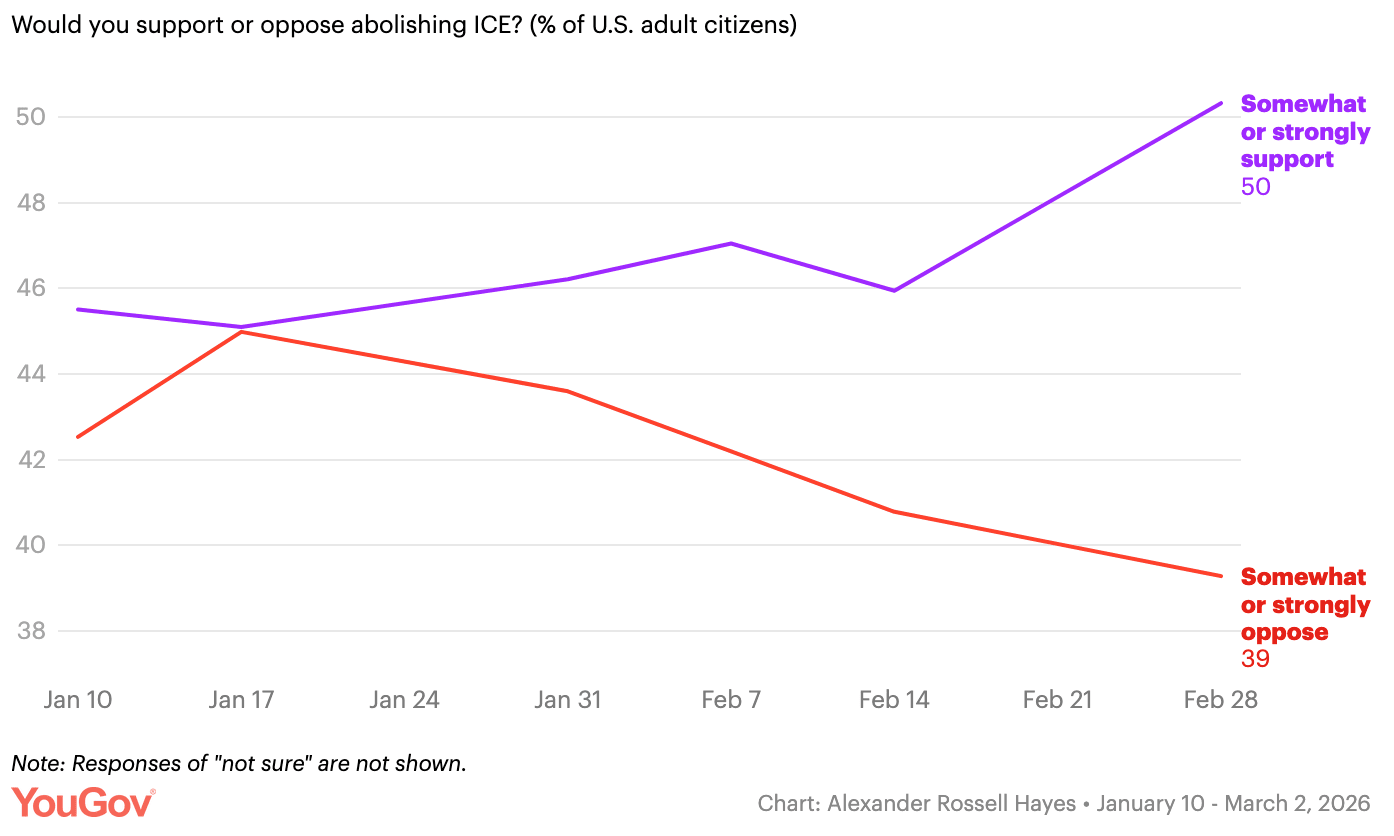
In summary: we can expect more on-the-street ICE activities and will see no change in tactics regarding overtly harsh enforcement techniques of non-criminal immigrants. We can anticipate more murders of anyone in proximity to ICE activities, and no independent agency will hold accountable the agents who kill. We will continue to see an increase in protesters being charged falsely with the once-obscure 18 U.S.C. 111 statute, which makes it a federal crime to assault or forcibly impede a government officer. We therefore need more people mobilized in Rapid Response groups to stand up for the disappeared as well as for our constitutional rights.

WHAT CAN WE DO?
  • Participate in neighborhood walks for a Rapid Response group in these key areas:
    • 1-2 block radius of any 7 train stop in the area (Jackson Heights, Elmhurst, Corona)
    • Most of Corona south of Northern Blvd. to just south of Corona Ave.
    • All along 111th, 108th streets
    • 1-2 block radius of the Ideal Supermarket by Corona Ave at 102nd street
    • Along 45th Ave., the LIRR underpass
    • Eastern side of Jackson Heights closer to Corona 
    • North of Northern Blvd. along 31st/32nd Aves.
    • Staging sites: FMCP parking lots, QCM parking lots, parking lots along Northern Blvd./Queens Blvd. 
  • Do what you can to help the Legal Defense Fund achieve their “6 Steps to End ICE and Other Federal Law Enforcement Abuses in Our Streets” 
  • Support efforts to enforce gambling laws against prediction markets which profit from their speculations on ICE arrests.

2. Loss of TPS for Haitians Endangers New York’s Healthcare System

“During COVID, we knew we were exposed. We knew we could be the next one, but guess what? We showed up every day. Some of us lived in the hospital for months. And this is how we are being repaid.” Dr. Marie Paul, founder of Haitian Nurses Network

In November 2025, then Secretary of Homeland Security Kristi Noem declared that Temporary Protective Status (TPS) for Haitians would end on February 3, 2026, but on February 2, a US District Court for the District of Columbia put a stay on that decision. On June 25, the Supreme Court removed the stay, permitting the administration to remove TPS for Haitians and Syrians. The decision put 350,000 Haitians and 6,100 Syrians in danger of deportation. The decision disregarded the continuing chaos in Haiti. It also invites turbulence in New York State’s health care system where thousands of Haitians currently work. 

The court decision was not effective immediately. A 32-day delay is required before actions can take place, so on July 10, US Citizenship and Immigration Services (USCIS) announced that the current work permit expiration date for Haitians with TPS is July 24, 2026. The state has about 56,000 Haitian residents; the city has around 5,400. The most obvious consequences of the court’s decision are the total disruption of Haitian families’ lives and well-being as well as their inability to send money to relatives in their country of origin. Another serious consequence is economic damage. Nationwide, Haitian TPS holders contribute $5.9 billion to the US economy, including $1.1 billion to New York state and $281 million in federal, state and local taxes.

Additionally, the health care industry will be severely disrupted. Thousands of Haitians provide essential care as nurses and nursing assistants across New York’s hospitals, as home health aides to the elderly, and as caregivers in long-term care facilities. All their patients and clients will be severely affected if Haitians are unable to continue working.

According to an amicus brief filed in April by Letitia James and 18 other state attorneys general, there are tens of thousands of Haitian TPS holders nationwide who work in critical services including health care. The American Immigration Council states that 112,000 Haitians work nationwide in health care, including 58,000 home health aides.

The policy group FWD.us estimates there are 25,000 Haitian TPS holders working in New York state, including 5,000 caregivers and 2,000 nursing assistants who, along with other workers, contribute $141 million annually in state and local taxes.

It is well-known that there is a nursing shortage in New York City, and the loss of these TPS holders will only increase the problem.

“Even with the current numbers that they have, including TPS workers, there is still a nursing shortage. Removing even a small percentage of these people will further impact our ability to provide quality care. There is no replacement pipeline. That’s why I’m losing sleep. My concern is, what happens to patients?” Dr. Cherlie Magny-Normilus, a family nurse practitioner and assistant professor of nursing at New York University

There are efforts in Congress to alter these consequences. In April, the House passed a bill with bipartisan support to extend TPS protection for Haitians for three years. After the Supreme Court ruling, Senators Sheldon Whitehouse and Jack Reed presented Senate bill S.4814 to extend TPS for Haitians, and on July 6 Representative Mike Lawler (NY-17), a strong advocate for Haitians in his district, urged the Senate to take up the bill.

In the meantime, some families threatened with deportation may stop going to work, avoid school or public spaces, or withdraw from daily life because of ICE fears. For TPS holders, the main option now is to check for any other form of immigration relief and to start concrete planning in case TPS ends.

WHAT CAN WE DO?

In solidarity and with collective care,

Jackson Heights Immigrant Solidarity Network (JHISN)


Follow @JHSolidarity on Facebook and Twitter and share this newsletter with friends, families, neighbors, networks, and colleagues so they can subscribe and receive news from JHISN. 


JHISN Newsletter 07/26/2025

Dear friends,

Like many of you, we find ourselves at risk of being overwhelmed every week, sometimes daily, by immigration news. Much of it bad and some of it almost unbelievable. We continue to publish our monthly newsletter with a local focus whenever we can—looking at both the forces aligning against immigrant lives, and those allied with solidarity, resistance, and community-based care. None of it makes any sense without you, our readers, taking this news and acting when and where you can, for immigrant justice and power. Thank you for continuing to read the newsletter—and for using it as a tool in our common struggle.

Today’s issue takes on systematic wage theft—disproportionately experienced by immigrant workers—while highlighting how common it is in our own neighborhood. The newsletter also returns to the urgent issue of the Trump regime’s attempts to cancel Temporary Protective Status (TPS) for hundreds of thousands of legal immigrant US residents, including many in the Nepali community here in Queens.  

Newsletter highlights:
  1. Wage theft is all around us
  2. Temporary Protective Status (TPS) under assault: an update


1. Wage Theft is All Around Us

Wage theft is rampant in industries that employ large numbers of immigrant workers. These include agriculture, building maintenance, garment assembly, hotel, restaurant and food service, construction, nursing homes, nail salons, warehouses and car washes. Inequality.org states the obvious: “Undocumented workers are particularly vulnerable to wage theft as they are often the least likely to report violations due to fear of retaliation, job loss, or exposure of their immigration status.” This has become an even more pressing consideration as the terror of the Trump regime’s mass deportation accelerates.

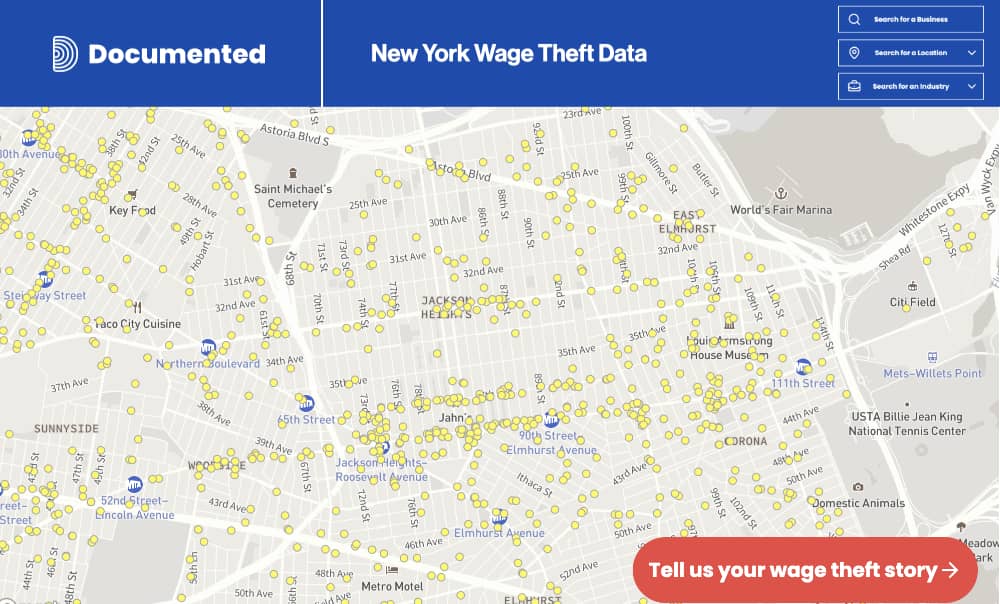
The Center for Popular Democracy reports that “An estimated 2.1 million New Yorkers are victims of wage theft annually, cheated out of a cumulative $3.2 billion in wages and benefits.” Wage theft among New York City’s 300,000 low-wage workers is reported to be roughly $18.4 million per week. The widespread nature of wage theft in the state and city can be visualized by clicking on Documented’s Wage Theft Monitor. The Monitor is based on state and federal data acquired through Freedom of Information requests. It records thousands of final wage theft settlements—large and small, in every neighborhood—including hundreds of findings against businesses in our area. 

Examples of wage theft in Queens alone seem endless:

  • In 2020, Desis Rising Up and Moving (DRUM) organized a large protest outside Sona Chaandi, one of the largest jewelry stores on 74th Street. Demonstrators accused the owners of sexual harassment, as well as wage theft. Nargis, an immigrant DRUM member and former employee, told the rally that she was harassed, paid $50 to $75 for 10 hour days, and forced to take care of the owner’s elderly parent without pay. The Documented Wage Theft Monitor shows that Sona Chaandi was eventually ordered to pay $65,000 to two unnamed workers.
  • Some local eating and drinking establishments with immigrant work forces have faced large wage theft settlements. El Picosito Bar on Roosevelt was ordered to pay $237,621 to 10 workers a few years back. La Boina Roja Steakhouse was recently ordered by the state to pay $221,130 to 11 workers, according to the Wage Theft Monitor. National chain restaurants are also implicated. For instance, Chipotle on Northern Boulevard was ordered to reimburse 85 workers in a wage theft case filed in 2023.
  • In 2022, Attorney General Letitia James announced a settlement of more than $90,000 in favor of several Astoria laundry workers. The Laundry Workers Center, which primarily represents immigrant women of color, did the initial investigation on the case and pushed it to the AG’s office.
  • That same year, James also won a $130,000 settlement for two building superintendents in Flushing who were paid no wages at all—the owners had decided that a rent-free apartment would serve as their only compensation.
  • Last year, Make the Road New York was instrumental in publicizing and filing a disturbing wage theft complaint by Ecuadorian migrants at a tobacco packaging factory in Queens. Workers assert that they were paid about $4 an hour, working in sweatshop conditions 10-13 hours a day, seven days a week.
  • This summer, Assemblymember Shekar Krishnan took the lead in trying to terminate lucrative city contracts handed out to Griffin’s Landscaping, a firm accused of repeated wage theft and other illegal behavior.

Unfortunately, many ripped-off immigrant workers never get a legal settlement, or any kind of justice. Even those bold enough to file complaints with state or federal authorities face an uphill struggle. They may win their cases, which often take years, and yet the employer stalls, refuses to pay the judgement, hides, or declares bankruptcy.

“Hildalyn Colón Hernández, deputy director of New Immigrant Community Empowerment, a New York-based worker advocacy organization, said, ‘Employers are operating with no consequences’….Colón Hernández added that her organization now trains its employees on how to investigate wage theft because it would take too long if they had to rely on federal or state investigators to recover back wages.”  —ProPublica, 8/22/23

WHAT CAN WE DO?

2. The Impact of TPS Changes for NY

“The law is very clear that once the TPS extension has been granted, it cannot be taken away en masse. This is the first time in the 35-year history of the TPS statute that anyone’s ever tried to do that.” Ahilan Arulanantham, co-director, Center for Immigration Law and Policy, UCLA School of Law

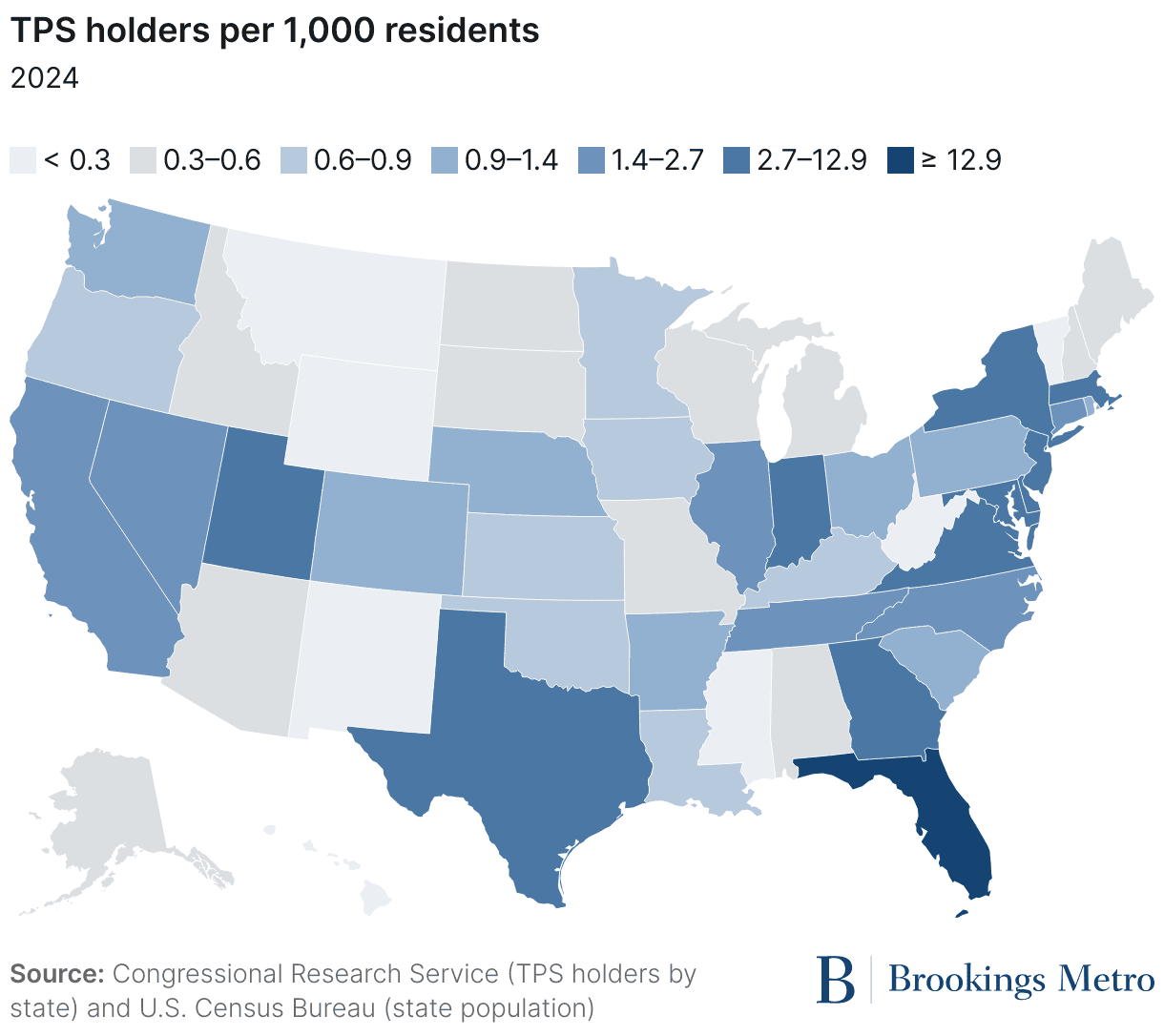
The Brookings Institute warned that Trump’s campaign promises targeting immigrants “would have disproportionate impacts on U.S. cities and urban areas, given that most foreign-born individuals live and work in these places.” Among US counties with undocumented populations, Queens is ranked the sixth-largest and has over three TPS holders per 1,000 people. (With a population of about 2,250,000, that amounts to over 6,750 TPS holders.) The Trump regime, led by Stephen Miller’s hard-line propaganda, aims to abruptly end TPS status for hundreds of thousands of US residents, which disproportionately threatens people living here in Queens and NYC.  

About 40% of the migrants who arrived in NY in 2022-23 came from Venezuela under TPS protections. New York City has the second-largest TPS-eligible Haitian population in the nation, which comprises about 3% of the city’s population. Among other TPS recipients, New York City also has the largest Honduran population and, residing in both Woodside and Jackson Heights is the second-largest Nepali migrant population in the country. Around Flushing and Kew Gardens, there is a large population of Afghan immigrants in Queens. 

These groups combined comprise 87,000 TPS holders in New York state who are specifically under threat from the questionable legal actions spearheaded by the Trump administration to strip their legal authorization to remain and work in the US, making them all detainable and deportable. The inappropriately named One Big Beautiful Bill, which barely received enough votes to become law, supplements these attacks by requiring higher fees for individuals to submit forms necessary to file in court to fight against potential deportation. The Showcase of Nepalis in New York (NepYork) published the full details of these cost increases. NepYork also reported on a recent NJ event organized to discuss increased deportation threats and the imminent termination of TPS for Nepalese immigrants. 

“TPS is ending on August 5 [for Nepal], and thousands of lives are hanging by a thread. We organized this not just because the law is changing, but because our families are suffering silently. Many don’t know their rights. Many are scared. We have organized this event to help them find a way and let them know they are not alone.” Dr. Bishnu Maya Pariyar, Program Director at Hudson S.P.E.A.K.S.

Pushback against TPS terminations includes Maryland Senator Chris Van Hollen’s SECURE Act, introduced last month along with 30 other senators. The bill would secure a pathway to permanent residency and is supported by numerous unions, CASA, the National TPS Alliance, and the National Network for Arab American Communities. Additionally, in February, the Dream and Promise Act was resubmitted—a bipartisan bill supported by nearly 200 representatives that would protect DACA recipients as well as TPS holders.  

On Monday, July 28, Queens Borough President Donovan Richards will hold a rally at 6:00 PM at Queens Borough Hall to support community members who are deeply affected by the terminations of Temporary Protected Status. Haitian-American City Councilmember Farah Louis has also spoken out against the efforts to end TPS. She notes that people fled their dangerous home countries, came here for a better life, they work for local businesses, and invest in the economy here—and now all that is about to be snatched away. Brad Lander, the NYC Comptroller, has published Protecting Our Neighbors, describing the humanitarian costs of cancelling TPS. His report also highlights the defunding by the Trump and Adams administrations of vital legal services used to protect over 1,800 children whose lives will be disrupted by this change.

Hundreds of thousands of TPS recipients, along with family members and supporters, await the outcome of the numerous challenges made in court by the National TPS Alliance, CASA, Haitian Americans United Inc., and the Haitian Evangelical Clergy Association as the clock ticks down towards deadlines that threaten to end their legal status. 

Country Designation Date Most Recent Action Expiration Date # Individuals
Afghanistan* May 20, 2022 Termination (5/13/25) July 14, 2025 11,700
Cameroon* June 7, 2022 Termination (6/4/25) August 4, 2025 5,200
Haiti* Jan. 21, 2010 Termination (7/1/25) Sept. 2, 2025 348,187
Honduras* Jan. 5, 1999 Termination (7/8/25) Sept. 8, 2025 72,000
Nicaragua* Jan. 5, 1999 Termination (7/8/25) Sept. 8, 2025 4,000
Nepal* June 24, 2015 Termination (6/6/25) August 5, 2025 12,700
Venezuela* Oct. 3, 2023 (re-designation) Termination (2/5/25) Not applicable 348,202

Table compiled by bhfs 7/22/2025
* Asterisks denote ongoing litigation 

WHAT CAN WE DO?
  • Local group DRUM has been organizing for 25 years and supports the Nepali population under threat from TPS terminations. Join their 25×25 campaign and have 25 of your own contacts donate $25 to support their work.
  • The National TPS alliance includes, among others, the National Day Laborer Organizing Network (NDLON), Adhikaar and the Haitian Bridge Alliance. If you are able, consider donating to any or all of these organizations.
  • Attend the rally this Monday, July 28, at 6pm at Queens Borough Hall to demand continued TPS protections for immigrant neighbors. 


In solidarity and with collective care,

Jackson Heights Immigrant Solidarity Network (JHISN)


Follow @JHSolidarity on Facebook and Twitter and share this newsletter with friends, families, neighbors, networks, and colleagues so they can subscribe and receive news from JHISN.


JHISN Newsletter 11/18/2023

Dear friends, 

As the UN announces that millions of displaced people face starvation in Gaza, JHISN adds our voice to the humanitarian calls for an immediate cease-fire and for an end to all war crimes, Islamophobia, and anti-semitism. While, at home, our mayor scapegoats desperate displaced migrants as the reason for cutting city services, JHISN calls for strict adherence to international law regarding asylum seekers and taxing the rich to pay for the needs of all New York residents, new and old. Our libraries are threatened by budget cuts despite providing critical community services including their Winter Coat Drive which we encourage our readers to support with donations at the 81st Street location.

In this newsletter, we offer an additional way to listen to local coverage of immigrant stories online with WBAI in partnership with the DocumentedNY team. Happily, we lead with the excellent news about the power of immigrant labor that has resulted in the hired car workers in NYC getting back hundreds of millions of dollars in wages stolen by Uber and Lyft.

1. Taxi Workers Alliance Celebrates Massive Wage Theft Settlement

“NYC Uber and Lyft drivers were cheated out of their hard-earned income at a time when an independent study found drivers were earning below even the minimum wage, and when out of that income drivers must pay for operating expenses. On top of that, drivers are locked out of the courts due to arbitration. Tens of thousands of drivers were cheated out of a better life and then kept from pursuing justice.” —Bhairavi Desai, New York Taxi Workers Alliance Executive Director

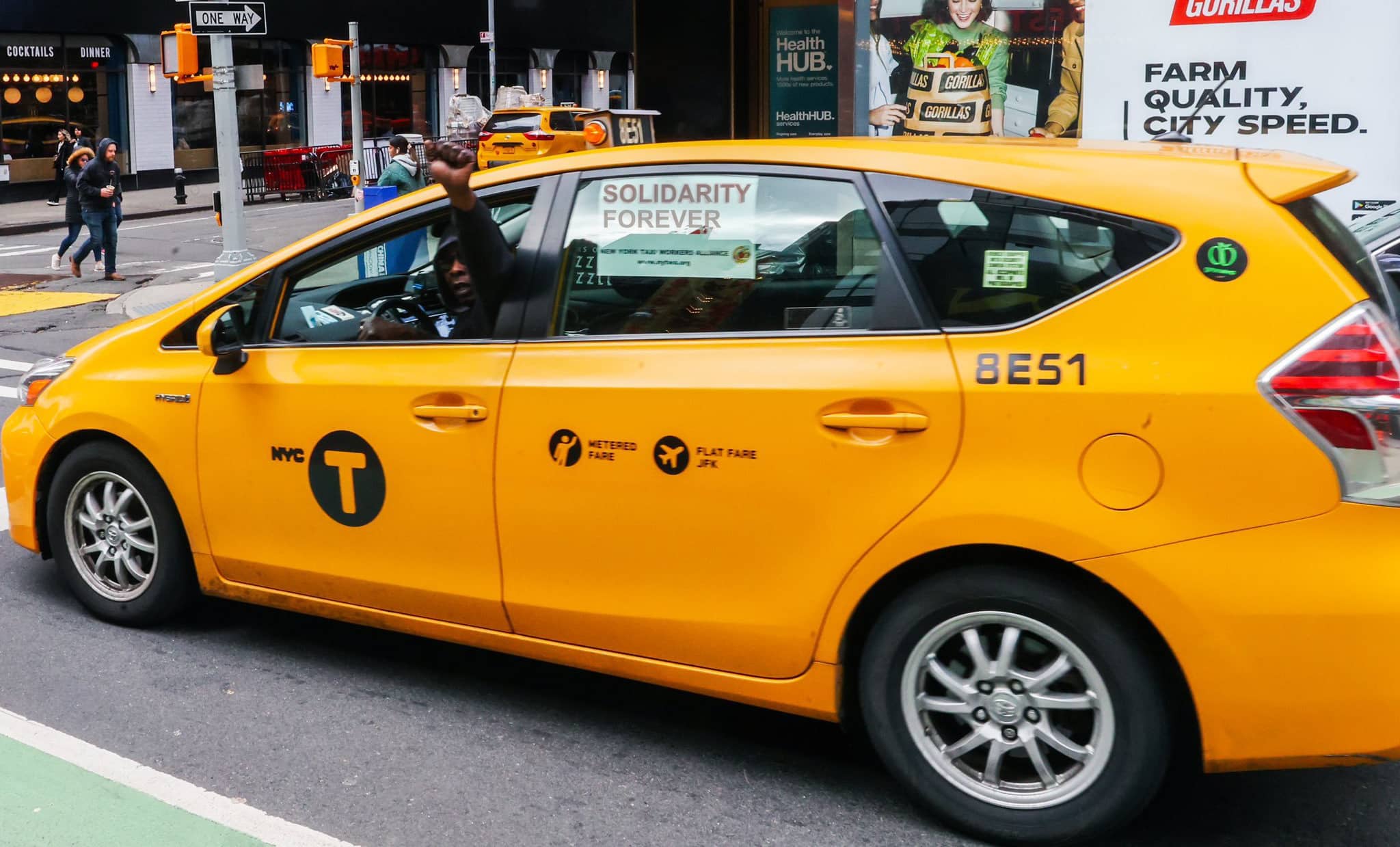
The taxi and hired car industry, powered by immigrant labor, is an essential part of NYC’s economy. It’s also a site of constant cutthroat struggle, where billionaires fight for market share, and weaponize political connections and technology to ruthlessly extract profit from hundreds of thousands of drivers. Remarkably, the drivers, led by the New York Taxi Workers Alliance (NYTWA), not only manage to survive in this merciless arena, but continue to notch up significant victories.

NYTWA started in 1998, defending the rights of yellow cab and black car workers—long before the advent of ride-share apps. But once Uber and Lyft started flooding the streets with tens of thousands of cars, the union pivoted to include the app drivers’ concerns. Today 70 percent of the 21,000 NYTWA members are Uber and Lyft drivers. 

The union soon learned that ride-sharing companies were engaged in widespread wage theft, including illegally deducting passenger sales tax out of driver’s pay. Employer-friendly arbitration clauses, included by default in drivers’ contracts, severely limited the ability of the workers to sue. In 2015, NYTWA asked the governor and attorney general to do something about their stolen wages. They were turned down flat.

Undeterred, the NYTWA began a relentless campaign to bring Uber and Lyft to account. In 2016, they filed suit and publicized the app companies’ blatant lawbreaking. Soon, Uber “discovered” that they had “made a mistake” in the way they calculated commissions, and promised to pay back tens of millions of dollars—a small proportion of what was owed. In 2019 and 2020, the NYTWA went back to court, challenging the arbitration clauses in cases of wage theft, and demanding full reimbursement for all drivers.

On November 2, after eight and a half years of NYTWA organizing, State Attorney General Letitia James announced that Uber and Lyft had agreed to a massive settlement; one of the largest wage theft recoveries in history. The companies will pay back all the stolen wages, amounting to $328 million. In addition, Uber and Lyft have agreed to guarantee drivers a minimum wage and sick leave. As NYTA’s Desai says,

“You can’t turn back the clock and feed a hungry belly, but this money is going to help drivers get the life that they should have had in the years that this money was initially stolen. I hope that drivers will be able to move into that bigger apartment, put a down payment on their next car, or have their kid go back to college – that’s how significant this is.”

Attorney General James praised the drivers for their unrelenting efforts. She thanked the NYTWA specifically “for bringing the matter to this office.”

As we write, another uphill NYTWA battle against the ride-share companies and the city administration is underway. The union supports the longstanding cap on the number of ride-share vehicles in the city. The cap serves to prevent the companies from oversaturating the city with cars and pushing down driver income. But Uber and its captive mouthpiece, the Independent Drivers Guild, have been pushing for an exemption from the cap for electric vehicles. This would do more than weaken the cap: because of a city mandate for all-electric fleets by 2030, exempting electric vehicles essentially does away with the cap altogether. As usual, the city’s Taxi and Limousine Commission has taken the companies’ side.

For now, an injunction stemming from a NYTWA lawsuit has stopped the city from issuing any more electric for-hire vehicle license plates.

WHAT CAN WE DO?:
  • Donate to the NYTWA
  • Read more about Uber and Lyft wage theft and the campaign to stop it

2. DocumentedNY on the Radio

“Our journey on earth, though difficult and long, shall be filled with happiness and in the end everyone gets their due, either good or bad.”—Irinajo Lyrics by Beautiful Nubia as translated from Yoruba by Fisayo Okare, host of Documented Immigration News Roundup

The online free speech radio station, WBAI, has been elevating the work of the DocumentedNY news source with a half-hour show airing at 5 pm on Saturdays. The show host, Fisayo Okare, has brought attention to migration issues ever since Texas started busing migrants to NYC. She brings to us not just the words, but the live voices of people advocating for the immigrant populations coming into New York City. 

In the November 11 episode, Okare spoke with Diane Enobabor, who grew up in Texas and is currently a PhD student at CUNY. Enobabor co-founded BAMSA, the Black and Arab Movement Solidarity Alliance, to support men placed at the Stockton Street “respite center” in Bushwick/Bed-Stuy after they arrived from Texas. Along with other members of BAMSA’a rapid response team, she advocated for the City to better support these immigrants, including ensuring that the men had access to showers. BAMSA originally planned to volunteer support work for no more than two months, so as to not cover over the need to address systemic problems about the way the city was providing support services.

BAMSA used monies from a $5,000 grant to launch ESL classes and to begin capturing better data about the migrants they were working with. Since the asylum process tracks people based on the last nation of residency rather than their nation of origin, many asylum seekers of African origin become statistically invisible after coming to the US via other nations. BAMSA’s research has shown that 40% of African migrants arrive by plane, 10% by train, 49% by bus, and only 1% arrive on the Texas buses.

Enobabor also learned that recent migrants who move outside of NYC, such as the Mauritanians who have found success in Ohio, as well as those who returned to Texas, actually found cheaper housing and better access to work opportunities elsewhere. She notes that NYC used to be the foundational start for most migrants but now, by not taking this opportunity to provide the best support to new migrants, NYC is missing an important chance for its own revitalization.

Enobabor and Okare also raised awareness of Adama Bah who founded a Harlem non-profit called Afrikana. The organization played a crucial role by serving as greeters to arriving migrants at Port Authority and then expanded support by helping provide IDNYC cards to people without established residency. Bah’s efforts to support new immigrants were recognized earlier this year when State Senator Jessica Ramos nominated her for the BPHA Community Awards from the New York State Black, Puerto Rican, Hispanic, and Asian Legislative Caucus.

JHISN applauds the work of these incredible women. We encourage our readers to support DocumentedNY and to listen to the noteworthy online radio coverage the news team is now providing about migration issues.

WHAT CAN WE DO?

In solidarity and with collective care,

Jackson Heights Immigrant Solidarity Network (JHISN)


Follow @JHSolidarity on Facebook and Twitter and share this newsletter with friends, families, neighbors, networks, and colleagues so they can subscribe and receive news from JHISN.