Tag: Nicaragua

JHISN Newsletter 01/24/2026

Dear friends,

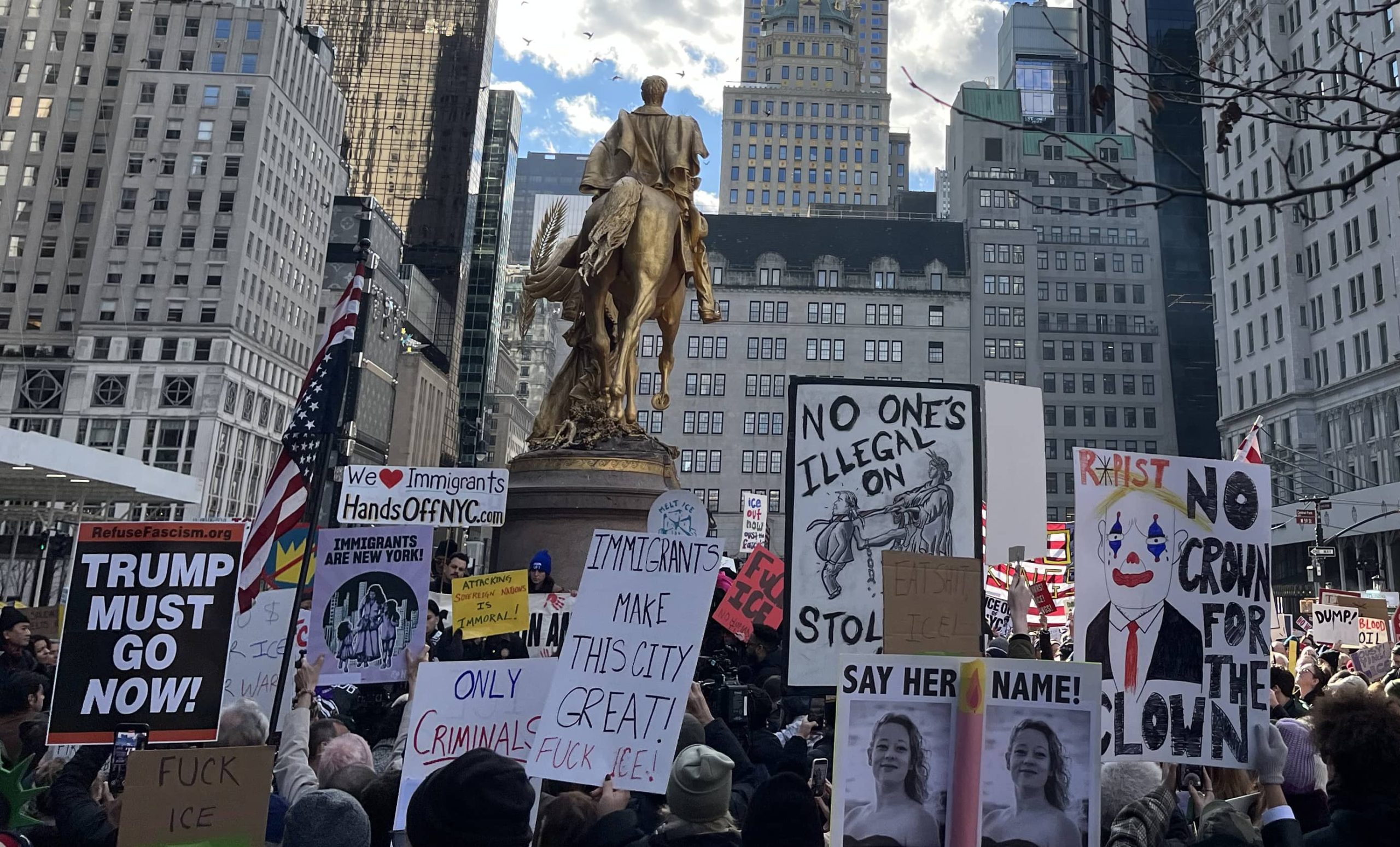
Yesterday, New York City joined protests around the country, standing with striking Minnesotans who have risen in the cold as a powerful anti-ICE voice. They represent a people’s resistance against the always escalating, harmful, militarized tactics of Homeland Security. The entire nation watched a federal agent shoot and kill Renee Gooda poet, mother, and citizen who refused to ignore the inhumane federal deportation operations in her Minneapolis neighborhood.  The president, and others in the administration and blamestream media, peddled the lie that Good was a domestic terrorist who was the cause of her own death. The person who clearly killed Renee Good was not a newly hired agent who lacked training: Jonathan Ross served more than 10 years in ICE’s elite Special Response Team.

While many agree that ICE (established less than 25 years ago) should be abolished, most Democrat leaders appear to be following the guidance of a “Don’t Say Abolish ICE” memo. Written by a former Customs and Border Protection official who is now a corporate consultant for the defense and surveillance sector, the memo advises reforming and retraining ICE. Fortunately, our new Mayor, Zohran Mamdani, remains strong in his stance. He stated on ABC’s, The View, “I am in support of abolishing ICE…We’re seeing a government agency that is supposed to be enforcing some kind of immigration law, but instead what it’s doing is terrorizing people”. 

Today’s newsletter reports on NYC’s now ex-mayor’s veto, just as he left office, of City Council legislation promoting immigrant and economic justice. We then offer an update on battles over Temporary Protective Status (TPS), including the good news of a recent court decision that reverses the Trump regime’s cancellation of protections for Nepali TPS holders. 

Newsletter highlights:
  1. Eric Adams vetoes immigrant justice in cruel exit act
  2. Temporary Protective Status (TPS) under attack: Update


1. Eric Adams’ Last Betrayal

“It is unsurprising that this mayor is ending his term by demonstrating, once again, that protecting and supporting working-class New Yorkers is not his priority. His vetoes put special interests above greater affordability and opportunity for hardworking New Yorkers, and public safety.” — Outgoing City Council Speaker Adrienne Adams

On his last day in office, Eric Adams—a mayor we have long criticized for scapegoating immigrants—vetoed three key pro-immigrant legislative packages that had been passed by large majorities in the City Council. The bills were among a total of 19 measures Adams vetoed, as a final New Year’s Eve “drop dead” to the lawmakers and the people of New York.

One of the vetoed packages aims to regulate and reform street vending. Among its provisions is the long-delayed raising of the cap on the number of vending licenses. Local Councilmember Shekar Krishnan had praised passage of the package as “a historic day for workers.” The legislation became urgent after Mayor Adams, who had promised to raise the cap and dial down punitive enforcement against vendors, made a quick 180-degree turn, joining with right-wing forces in a campaign to uproot and intimidate vendors in Corona Plaza, Roosevelt Avenue, and other parts of the city.

Another veto casualty was Tiffany Cabán’s Safer Sanctuary Act. This would outlaw the establishment of ICE offices on Rikers Island, something that has been contentious throughout Adams’ tenure. That act would also close a loophole in the city’s sanctuary laws, making it clear that the restrictions they place on cooperation with federal authorities would apply to all immigration enforcement agencies, not just ICE.

Adams’ third anti-immigrant veto gave a thumbs down to badly-needed legislation defending deliveristas from a wave of arbitrary “deactivations”—firings—initiated by delivery app companies. The Council measure requires that delivery workers be given a reason for deactivation, the right to appeal, and a 120-day notice before permanent deactivation.

According to city law, once the vetoes were formally registered, which happened on January 7, the Council has 30 days to override them, a process which requires a 2/3rds majority vote. The clock is ticking, with many other priorities competing for legislators’ attention in the new year.

New Council Speaker Julie Menin can strongly influence the fate of the vetoed bills, since she largely controls legislative scheduling and agendas. In practice, she seems unlikely to run out the clock on these three measures, which were all passed with “veto-proof “ majorities. For instance, the measure lifting the vendor license cap was passed by a margin of 39-9, as was the Safer Sanctuary Act. The bill defending deliveristas passed 40-8. Menin is a supporter of sanctuary laws, and was actually a co-sponsor of the street vendor bill.

However, Menin has refused to commit to overriding all of Mayor Adams’ vetoes, saying only that “the Council will consider next steps on these bills.”

NYC lawmakers have been given further impetus to act by ICE’s arrest of one of their own staffers, Venezuelan immigrant Andres Rubio Bohorquez, at a routine asylum interview. Menin and many other Council members have expressed concern and anger at ICE over the data analyst’s detention. This attack on one of their own employees is likely to concentrate the Council’s attention, bringing home how much is at stake for immigrants in their deliberations.

WHAT CAN WE DO?


2. The Ongoing Weaponization Of TPS

“The harm already caused by the administration’s cruel, lawless actions cannot be undone, but we are hopeful that, with this ruling, the new year will bring a measure of justice and peace to the TPS holder community.” Jessica Bansal, attorney at the National Day Laborer Organizing Network (NDLON)

The new year started positively for Adhikaar, the Queens-based group that serves and supports the Nepali-speaking community in NYC. They shared welcome news that a Northern California District Court judge ruled that the Trump administration had illegally ended TPS for Honduras, Nepal, and Nicaragua. Adhikaar applauded the work of the National Day Laborer Organizing Network (NDLON) and other members of the National TPS Alliance who argued the legal case, which affects around 60,000 people nationwide, including thousands of Queens residents.

Ama Frimpong, the Legal Director of CASA, stated that the ruling clearly showed TPS cannot be terminated based on racialized political narratives. Frimpong continued, “This decision is not only a victory for TPS holders from Honduras, Nicaragua, and Nepal, but an encouraging signal for TPS holders from Venezuela, Cameroon, Afghanistan, and beyond who are fighting to protect their families and their futures.” 

Two days later, after US forces captured and removed the president of Venezuela, Homeland Security Secretary Kristy Noem announced that Venezuelans in the US under TPS had the opportunity to apply for refugee status. There was no hint as to how more than 600,000 people could do that when the US government has limited the total number of refugees per year to just 7,500. A few hours after her announcement, the Homeland Security eX-twitter account denied that Noem had ever said that, and instead reaffirmed that she had ended TPS for more than 500,000 people. The post suggested that, “now they can go home to a country that they love.” Even those Venezuelans who are happy about Maduro’s removal say returning is an extreme risk.

Minnesota has the largest Somali population in the US. Just days after a weekend of national protest in the wake of the ICE murder of Renee Nicole Good in Minneapolis, and Homeland Security’s brutal tactics in the Twin Cities, Trump announced the termination of TPS for Somalis. Ignoring the economic destabilization it will bring, he declared legal protections for Somali nationals enrolled in the TPS program will be ended in two months, on March 17. He claimed that country conditions had improved, an opinion easily contradicted by the work of Freedom House, which has monitored the state of global freedom for 85 years: currently, they give Somalia a Global Freedom Score of 8 out of 100; the US score is 84

The day after Trump’s Somalia announcement, the US Ninth Circuit Court of Appeals heard oral arguments for the second of the National TPS Alliance lawsuits, defending Haitians and Venezuelans. A Federal Judge has indicated she will not rule on the Haitian TPS case until February 6, which is just one day before that protection is set to expire. Just as the year began, and our article started with hope from NDLON, so these recent fraught weeks have ended with Ahilan Arulanantham, the Co-Director of UCLA’s Center for Immigration Law & Policy (CILP) stating, “We hope the court will insist the administration comply with the law as Congress intended it to by engaging in an objective assessment of the country conditions in Venezuela.” 

We wonder, is “hope” really enough?

WHAT CAN WE DO?

In solidarity and with collective care,

Jackson Heights Immigrant Solidarity Network (JHISN)


Follow @JHSolidarity on Facebook and Twitter and share this newsletter with friends, families, neighbors, networks, and colleagues so they can subscribe and receive news from JHISN. 

 

JHISN Newsletter 07/15/2023

Dear friends,

We write today’s newsletter at the intersection of local, national, and global politics—a dense intersection where all immigrants dwell. We update you on the current struggle of the local group Adhikaar to secure extended Temporary Protective Status (TPS) for members of the Nepali-speaking community, many of them neighbors here in central Queens. And we draw a connecting line between the imperial histories that drive current migration, and the national failure of the US to abide by international asylum laws. A source of immense human pain at the US-Mexico border, and in local immigrant communities like ours.

Please note that the JHISN newsletter also appears on our website in Spanish. Share the link!

Newsletter highlights:
  1. Asylum politics today
  2. Adhikaar fights for TPS

1. Asylum Is a Human Right

Step by step, the US and other wealthy nations are undermining the right to asylum—a vital right established by the international community in the wake of the horrors of World War II. Today, mainstream political discourse in the Global North treats seeking asylum as a crime and treats offering asylum as a burden.

>>Seeking Asylum Is not a Crime

US and international law clearly specify that any person can request asylum, and will be treated with respect and dignity, no matter how they arrive—including if they simply walk across a border. This solemn obligation has been reaffirmed by the federal courts, the UN, and the Geneva Convention.

It is the US government, not asylum seekers, that commits crimes when it:

>>Offering Asylum Is not a Burden

Imperialism creates refugees. Around the world, the US government and US corporations invade, provoke civil wars, export gang violence, generate economic devastation through “free trade” laws, destroy the environment, and sponsor dictators and death squads. These predatory policies, which profit rich North Americans and corporations, are responsible for chaos, violence, and persecution and cause millions to flee their homes. Ironically, the US admits far fewer asylum seekers for its size than many other nations. Our government also callously discriminates against those whose lives are impacted the most by imperialism, prioritizing expedited or privatized arrangements for refugees who have money, connections, or white skin.

Nevertheless, what politicians from both major parties prefer to talk about is how costly it is to host asylum seekers. These are the same “leaders” who promote subsidies for real estate interests and monopoly corporations—corrupt handouts which are bad for working-class people and staggeringly expensive. Politicians’ complaints about refugees inadvertently shine a harsh spotlight on their own lack of compassion and their comfort with radical inequality.

We are constantly lectured that we “can’t afford” asylum or any other social needs of oppressed people. We are told that “The Budget” is a zero-sum game with a fixed limit. But the wealthiest country in the world (and NYC, its wealthiest city) can certainly afford to welcome many more asylum seekers than it does today. To meet this need—this human obligation—there is really only one political decision required: making the rich pay their fair share.


2. Adhikaar Defends TPS before the Ninth Circuit Court

“The TPS extension has again given us temporary relief but we cannot continue our life on one to two-year increments. We have made the U.S. our home, and we are here to stay. We will fight tooth and nail to secure redesignations for all four countries and permanent protections for all.”  Keshav Bhattarai, Plaintiff, and Adhikaar Member Leader

As part of its anti-immigrant crusade, the Trump administration declared an end to Temporary Protected Status (TPS) for migrants who fled dangerous conditions in Nepal, El Salvador, Nicaragua, and Honduras. On Tuesday, June 20, President Biden reversed that decision, announcing instead an 18-month extension of the programs. As a result, existing TPS holders from those four countries will be protected until 2025 as long as they re-register.

Biden’s decision came just two days before a previously-scheduled hearing before the Ninth Circuit Court of Appeals in Seattle to review a major TPS case known as Ramos v Mayorkas. The plaintiffs are three Nepalis (Keshav Bhattarai, Saijan Panday, and Sumima Tapa) and two Salvadorans (Krista Ramos and Cristina Ramos)ee. Adhikaar—the Jackson Heights based group supporting the local Nepali-speaking community—plays a leading role in the case.

The history of Ramos v Mayorkas begins in 1990 when Congress established the TPS program, permitting migrants from unsafe countries to live and work in the US for a temporary, but extendable, period of time. Countries have been deemed unsafe due to natural disasters, political unrest, or armed conflict. Currently, there are approximately 400,000 holders of TPS in the US. Many of them have lived and worked here for decades.

When the Trump administration terminated TPS for Haiti, Nicaragua, Sudan, El Salvador, Nepal, and Honduras in 2017-2018, they were challenged by multiple lawsuits. A district court judge issued an injunction to prevent any of the terminations from going into effect, arguing that they were motivated by racism and failed to consider the current unsafe conditions in the affected countries. The Trump administration appealed, and in 2020 a three-judge panel of the Ninth Circuit Court of Appeals agreed with him that the injunction was improper. Lawyers from the ACLU, Adhikaar, the National Day Laborers Organization, and Unemployed Workers United asked for the entire Ninth Circuit to review the case, which they agreed to do, scheduling the hearing on June 22. 

Once the Biden administration’s June 20 extension was announced, the June 22 hearing turned into a debate about whether the court should still issue a decision and if so what it should be. Adhikaar argues that the court should return the case to the district court, allowing it to reaffirm its original decision that the Trump terminations were motivated by racism and therefore unconstitutional. 

On June 24, during an Adhikaar online town hall, Emi MacLean, an attorney on the case, reminded the audience about the intense anti-immigrant hostility coming from the Trump administration at the time of the TPS terminations.

“It’s important to remember how brave it was for people to come forward: those who were in the streets marching, those who went to Congress, and those who are willing to put their names on this lawsuit and share their stories publicly so the judges and the media and public would be aware of what was at stake and to force judges to make a decision about the legality.”

As things stand now, people from the four countries who had TPS protection at the time of the Trump terminations must re-register during a specific 60-day period to extend their TPS and work authorizations (EAD). 

DHS will extend TPS as follows:

  •  Nepal from Dec. 25, 2023 to June 24, 2025 (60-day re-registration period: Oct. 24, 2023 – Dec. 23, 2023)
  • El Salvador from Sept. 10, 2023 to March 9, 2025 (60-day re-registration period: July 12, 2023 – Sept. 10, 2023);
  • Honduras from Jan. 6, 2024 to July 5, 2025 (60-day re-registration period: Nov. 6, 2023 – Jan. 5, 2024);
  • Nicaragua from Jan. 6, 2024 to July 5, 2025 (60-day re-registration period: Nov. 6, 2023 – Jan. 5, 2024).

The National TPS Alliance and immigrant advocates are pleased that Biden reversed Trump’s plan to end TPS. But they are pushing the administration to do more than just extend the deadline for those who were already covered. They want him to “redesignate” the four countries, resetting the clock to include new immigrants in the program. They are also lobbying Congress to grant a legal pathway to citizenship for TPS holders. In the meantime, a ruling from the Ninth Circuit is awaited.

WHAT WE CAN DO?


In solidarity and with collective care,

Jackson Heights Immigrant Solidarity Network (JHISN)


Follow @JHSolidarity on Facebook and Twitter and share this newsletter with friends, families, neighbors, networks, and colleagues so they can subscribe and receive news from JHISN. 
JHISN Newsletter 01/28/2023

Dear friends,

We are excited to bring you news about recent changes, and accomplishments, at Damayan—a local immigrant justice group that some of our readers already know well. With Woodside now home to ‘Little Manila’ and over half of all Filipino New Yorkers living in Queens, Damayan’s grassroots work is vital to our community. We also introduce you to public events organized by the Zolberg Institute on Migration and Mobility housed at The New School, with a summary of their recent webinar on US border politics and Biden’s new asylum policy.  

Newsletter highlights:
  1. Damayan celebrates 20 years of Filipino organizing
  2. Public webinar on Biden’s betrayal of asylum seekers

1. DAMAYAN at 20

“Sa loob ng 20 dekada, nanatili ang Damayan na matatag sa pananaw na anti-imperialista, bumuo ng malinaw na vision at mission, at mga strategies para gumabay sa mga tulad nating domestic workers… [For 2 decades, Damayan has remained steadfast in its anti-imperialist vision, developed a clear vision and mission, and strategies to guide domestic workers like us…] Rose Alovera, Damayan Board Member

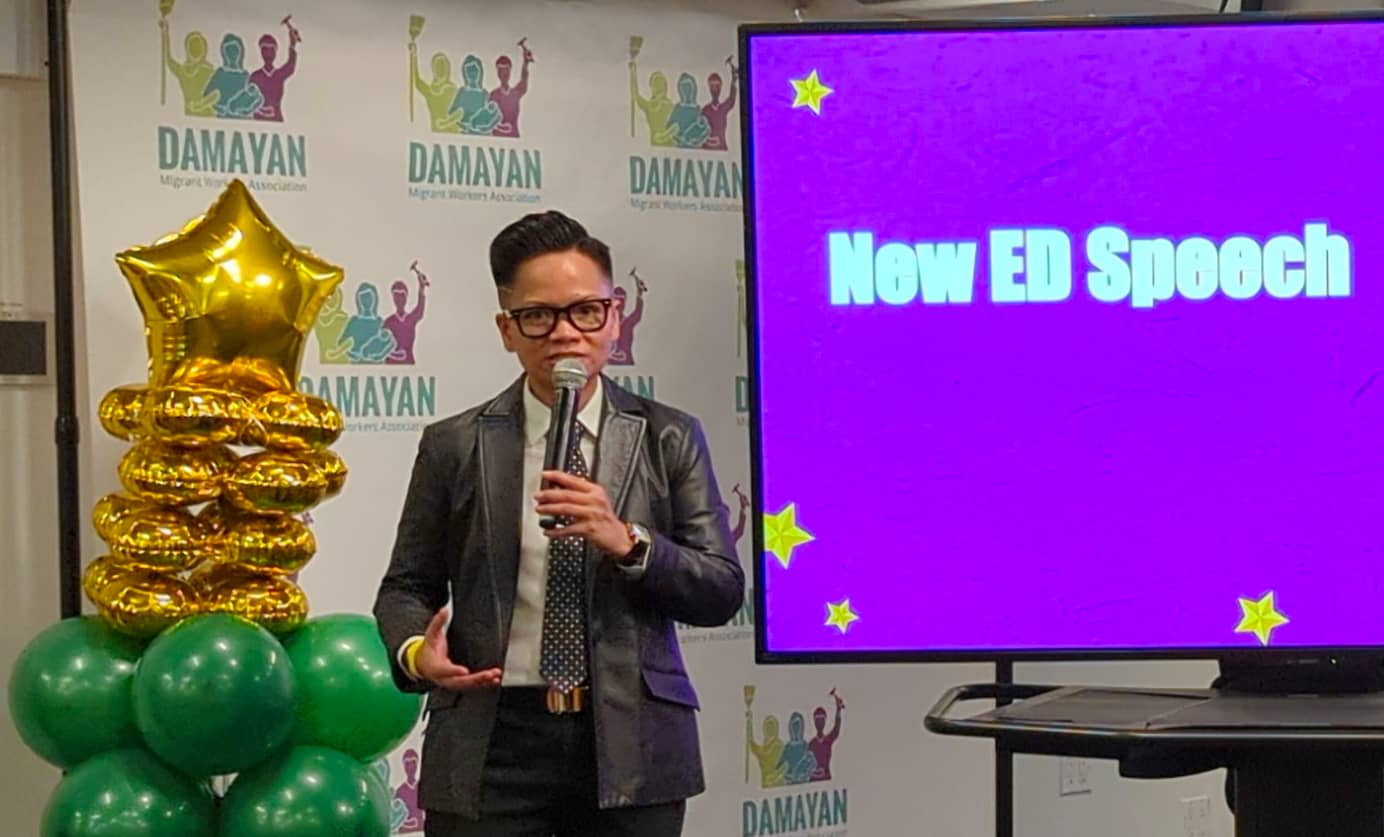
Damayan Migrant Workers Association’s mission is to “organize low-wage Filipino workers to combat labor trafficking, promote human and worker’s rights, and develop social justice leaders.” At the end of 2022, Damayan—many of whose 1500+ members live in Queens—made several major announcements at their 20th Anniversary and Annual Holiday Party.

Perhaps the most important news was that Riya Ortiz, a long-time organizer with Damayan, has been selected as the group’s new Executive Director. Ortiz said, “My family’s experience of forced migration and years of organizing and activism convinced me to embrace the vision and mission of Damayan.” Co-founder and outgoing ED Linda Oalican will transition out of office in the first quarter of this year, after two decades of what Damayan praised as “providing critical services, educating, organizing, and mobilizing Filipino migrant workers in New York and New Jersey.”

One of Damayan’s key accomplishments in 2022 was to help more than 200 Filipino workers receive a total of over $3 million from the New York State Excluded Workers Fund. Last year, Damayan assisted a record number of workers to gain visa approval, and secured financial assistance for 26 trafficking survivors through the federal Trafficking Victims Assistance Program. In a display of the group’s broad community support, Damayan’s recent holiday fundraiser easily surpassed its goal, raising over $22,000 from more than 170 donors.

JHISN congratulates Damayan and outgoing ED Lina Oalican on 20 years of impressive achievements in the fight for social justice. We extend our solidarity to new ED Ortiz, and to all Damayan’s Directors, activists, and members. 

WHAT CAN WE DO?
  • If you are able, please donate to Damayan!
  • Attend the tribute to outgoing Executive Director Linda Oalican on February 25th.

2. Asylum Betrayed: Biden’s Border Politics and Title 42

On January 13, The New School’s Zolberg Institute on Migration and Mobility here in NYC hosted an important webinar, “Asylum Betrayed: Biden’s Border Politics and Title 42.” The Institute offers courses, sponsors lectures, and events, and supports critical scholarship on all aspects of migration. The webinar discussion featured Eleanor Acar, director of the Refugee Protection Program at Human Rights First, Alexandra Delano Alonzo, professor and chair of Global Studies at The New School, and Lee Gelernt, Deputy Director of the ACLU’s Immigrants’ Rights Project. 

Participants reviewed multiple aspects of US immigration policy and highlighted problems with President Biden’s January 5 announcement of a new “parole” plan for migrants from Nicaragua, Cuba, and Haiti. This scheme will allow up to 30,000 migrants per month to enter the US for a period of two years and receive work authorization, but will require everybody to apply from their home country, have a sponsor in the US, and pass background checks. Anyone trying to enter in any other way will be expelled under the controversial “pandemic emergency” authority of Title 42 and will be disqualified from the program in the future. Mexico has agreed to accept 30,000 of those expelled each month. 

All webinar participants appreciated the value of providing migrants with a legal path for entry, but rejected the use of Title 42 to punish those unable to meet the requirements of parole. The Biden program is designed to favor people with family connections in the US and with financial resources. Some migrants with good cases for asylum will likely be expelled–-a violation of international law.

The webinar offered updated information about cross-border immigration to the US: 

  • Of the “2 million migrants” said to have recently crossed the southern border, many are actually people who were expelled and who then re-crossed, getting counted two or more times. Ms. Acer explained that the restrictive policies of former president Trump are the main cause of the ballooning numbers, not the weaknesses of Democrats’ border policy.
  • Among migrants recently expelled to Mexico under Title 42, some 13,400 are victims of kidnapping or rape. 
  • For the past three years, there has effectively been a halt to asylum—a clear violation of international law and stated US values, according to Mr. Gelernt.
  • The Mexican asylum system is already overburdened and underfunded and will have difficulty absorbing 30,000 additional migrants per month. It is not known why Mexico has agreed to accept people expelled by the US, but Dr. Delano Alonzo said the Mexican administration might be anticipating some sort of economic quid pro quo.

Biden’s new parole plan has been strongly criticized by many immigrant justice and advocacy organizations as well as by four Democratic senators who are usually White House allies—Senators Alex Padilla (California), Bob Menendez and Cory Booker (New Jersey), and Ben Ray Luján (New Mexico). One biting public statement against “parole” came from Murad Awawdeh, Executive Director of the New York Immigration Coalition:

“President Biden’s plan to expel those who attempt to cross the border … is an attack on the humanitarian values and obligations of the United States. This plan needlessly endangers the lives of those crossing the border in search of basic freedom in our country, and succumbs to the fearmongering espoused by anti-immigrant conservatives. . . . Rather than limiting humanitarian parole for just a select few with family connections and financial privilege, the Biden administration must expand additional protections for all asylum seekers, so that our country can fulfill its humanitarian obligations and provide opportunity and freedom for all.”


In solidarity and with collective care,

Jackson Heights Immigrant Solidarity Network (JHISN)

Follow @JHSolidarity on Facebook and Twitter and share this newsletter with friends, families, neighbors, networks, and colleagues so they can subscribe and receive news from JHISN.