Dear friends,
This month, Homeland Security Secretary Markwayne Mullin came to our city and criticized our Mayor and our Governor for refusing to work with the ICE agents that grab New Yorkers off the streets, predominantly in our Queens neighborhoods. He declared the end of the surge of ICE agents, who took over 2,100 people away from friends and families during the previous 2 months. Although declaring that these actions had reduced crime, DHS could only provide details of offenses by 10 people: less than 0.5% of those disappeared.
We still don’t know whether the end of this surge marks a change in the number of disappearances we see every day. Equally, we still don’t know whether the changes recently announced to Street Vending licenses—the topic of our first article—will improve the lives of the predominantly immigrant vendors awaiting news on their license applications.
At the end of the month, mainstream media companies were barred from covering the White House. While that new court battle continues, we focus on the important work of independent journalists and their newsrooms, who do not have the financial backing of corporate media giants. Our second article highlights some critical work these journalists published, revealing significant problems of this administration’s immigration enforcement tactics.
Newsletter highlights:
- Changes announced to Street Vendor license availability
- The incredible work of independent news reporting
1. New Street Vendor Licenses Bring Some Justice and Some Concerns
“We really want to unlock the economic potential of street vending in New York City, and we want to have their concerns front-of-mind as well.”—Kenny Minaya, Commissioner of the Department of Small Business Services
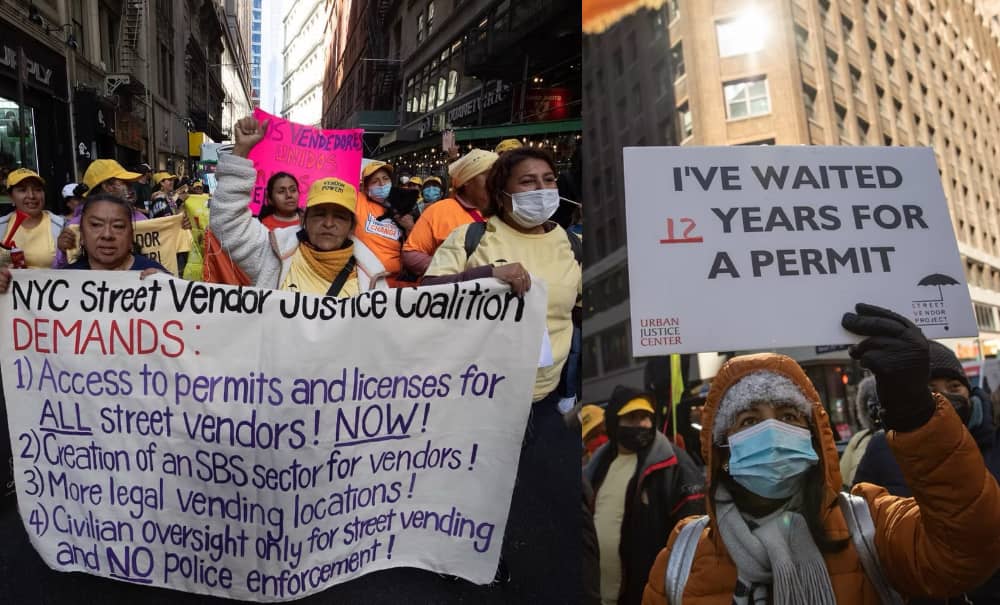
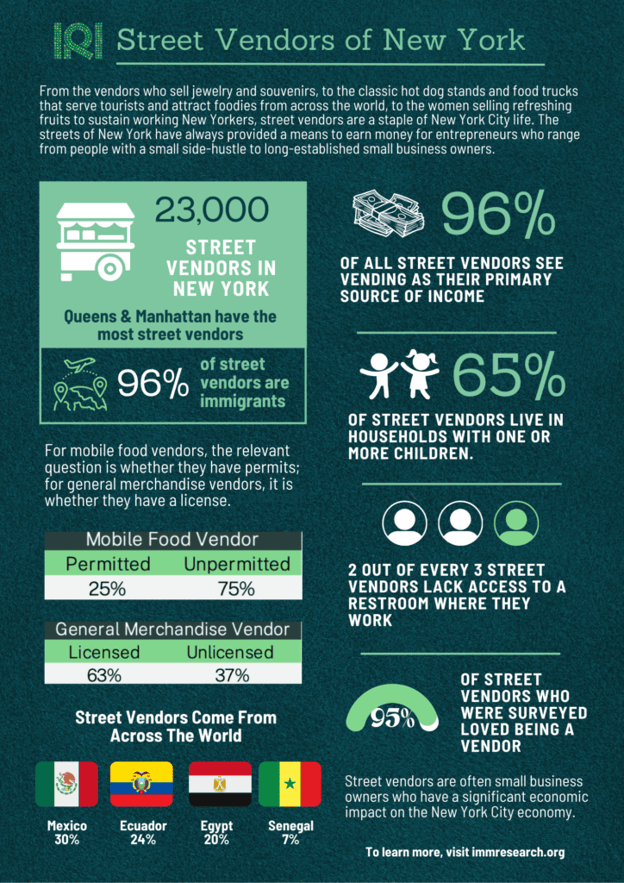
There are more than 23,000 street vendors in New York City, and 96% are immigrants. For decades, there has been a cap on the number of licenses available. However, after the City Council passed a package of laws on January 26, 2026, there will be 2,200 new licenses available each year through 2031.
The previous cap on general vendor licenses was 853, and the cap on food cart permits was 6,880. Also, there was a 10,000-person wait list for licenses that was closed in 2016. Many people have been waiting for years. Because of the scarcity of licenses, some vendors have been forced to pay several thousands of dollars to a license holder to “rent” a license. This is common, but not legal. Crackdowns on unlicensed vendors increased under Mayor Adams, with sweeps like “Operation Restore Roosevelt” in Queens and a ban on unlicensed vendors on the Brooklyn Bridge. The original package of reform bills was vetoed by Adams.
In March, Mayor Mamdani established the Office of Street Vendor Services as part of the NYC Department of Small Business Services. At the time, he said, “Our street vendors are not a problem to solve—they are a community to support. They feed us, employ us, and give our streets life at every hour.” The first executive director is Carina Kaufman-Gutierrez, co-director of the Street Vendor Project at the Urban Justice Center. She has been advocating for street vendors for seven years and keeping them up to date on regulations.
The package of new laws includes for training, cleanliness around carts, and proper trash disposal, as well as reducing any violations to civil charges instead of arrests on criminal charges.
There is a complicated procedure to apply for the new licenses. The Department of Consumer and Worker Protection (DCWP) is administering the process. People on the current wait list will receive priority and were supposed to receive letters in July/August telling them how to apply by October 29. Those not on the wait list can apply from November 2 to December 16. The new licenses will be issued after January 15, 2027.
The problem is that many long-time vendors were never able to get a spot on the current wait list because it closed in 2016. DCWP plans to provide new wait lists, but wants to ensure that people currently vending receive priority over new applicants. They have proposed vendors self-certify about the length of time they have been vending; however, it isn’t clear how that would work. Vendor leaders suggest that applicants should be required to provide at least one form of documentation to prove they have long-term vending experience. During a public hearing on August 19 about the new rules, City Councilmember Pierina Sanchez, who sponsored and fought for the new licensing bill, said:
“I am concerned that relying too heavily on self-certification of prior vending activity could allow longtime vendors to be pushed aside. Implementation must include a meaningful, fair process to verify existing vendors and ensure those who endured years of exclusion are not left behind again.”
Her suggestions for certification documents were sales tax certificates, vendor-related summonses, wholesale receipts, photos or letters from customers and local officials. In addition, she urged that the process include instructions and assistance available in languages spoken by vendors.
If the reform is successful, longtime vendors will receive licenses and be able to participate without fear in New York City’s economy.
What Can We Do?
- Continue to patronize your favorite vendors.
2. Revealing Investigations into ICE
Almost exactly a year ago, ICE agents rappelled from Blackhawk helicopters during a raid on a building in Chicago. The story was so unbelievable that the fact-checking site Snopes had to confirm that it was real. 37 people were taken, and the government’s public statements suggested they were members of the Venezuelan gang Tren de Aragua.
Last month, the podcast “Paper Trail” released a 40-minute update on the in-depth reporting done by the nonprofit newsroom ProPublica. The reporters revealed both the human stories about the immigrants disappeared by Homeland Security as well as the lack of veracity of the government’s sweeping allegations about the raid. It also shows the significant effort that goes into both finding and reporting this information with facts.
There were no warrants. A dozen children were separated from their parents. The people taken had open asylum cases and were legally in the country. Only three people had US criminal records. Data from Interpol and Venezuelan law enforcement had no records showing any of them were in gangs. The accusation of gang membership was never raised by the federal government in their court cases. Jessica Lussenhop, host of Paper Trail, reported that, “Of all the people they arrested, there was not a single criminal charge filed. Not one. Against anybody.”
Some of those arrested left the USA through the “voluntary departure” program; others were deported. The few women with US-born children were sent home inside the US. Within a few months, an investigation was opened by the Illinois Department of Human Rights into possible illegal activity related to the raid: Was there discriminatory action taken by the landlords to use the federal government to evict illegal immigrants from their building in that urban military-style raid?
These independent journalists and newsrooms keep us aware of the government’s storytelling of the past while tackling what is happening in the present. We recognize and applaud their work, which brings us the crucial truths about how this government attacks people and wields fear, with its tired narrative about immigrants being the source of all problems.
- The 19th provides a focus on topics that significantly impact women and LGBTQ+ immigrants. Stories include: men with sexual and gender-based violence being hired as ICE agents; the democrats who supported the Laken Riley Act that allows immigrants who were arrested to be deported even if they are not convicted of any crime; and the story of a grandmother operating a mobile health clinic outside Delaney Hall being assaulted by ICE agents.
- The City Reporter has an ICE section which recently included the story of ICE moving hundreds of detainees from Delaney Hall in NJ while protests raged after the third death of a detainee. They also reported that an ICE agent stole over $10,000 of photography equipment from a photojournalist outside Delaney Hall.
- DocumentedNY has reported on how NYC landlords use ICE threats to intimidate tenants. They showed that 93% of recent ICE street arrests in NYC targeted Latinos and how that discourages Day Laborers in Queens from showing up to work. They also reported on neighbors who showed up in Queens to keep watch for ICE when schools started this fall, and how the Trump administration has failed to convict most of the anti-ICE protesters it targeted with prosecution.
- Inkstick media recently did a story showing that ICE is making a record number of arrests now that the Kristy Noem tactic of publicly gloating about ICE actions has been replaced with the quietness of Markwayne Mullin. They have researched the details of immigrant detention funding and spotlighted that JD Vance’s response to the murder of Renee Good by ICE was that law enforcement will be used to punish critics.
- Mother Jones reported that DHS denies adding the names of citizens who protest ICE to a domestic terrorist database. Its Reveal podcast, produced with the Center for Investigative Reporting, published the personal stories of people caught up in ICE raids. It did a deep dive into the anti-ICE protesters of Prairieland, who are currently facing prison sentences of 15, 30, 70, and 100 years.
- ProPublica has created a “No Sanctuary” section that examines the unshackling of ICE. It has another called “Deported and Imprisoned” that reports on the detainees sent to El Salvador. They conducted a two-year investigation into the abuse of foreign farmworkers in Georgia. It revealed that immigrants could spend 26 days in jail when they are meant by law to be held for only 72 hours. It also reported on the corruption of the Trump administration’s awards of border wall contracts.
- Straight Arrow News reported that ICE facilities do not follow local rules, costing cities significant legal fees. It looked into ICE targeting white vans in Houston, resulting in ICE officers killing Lorenzo Salgado Araujo, someone who was not even a subject of their investigations.
These independent reporters, news agencies, and photojournalists do their work in the face of increasing state violence. The newsletters JHISN shares with you would not be possible without their invaluable efforts. We rely on them, and they rely on their subscription base to keep them doing this work. We hope you can subscribe to and support them, share their reporting broadly, and join with the Freedom of the Press Foundation to Hold ICE Accountable.
What Can We Do?
- Sign up for “The City Scoop” newsletter, donate to The City Reporter if you can, or buy some merch.
- Advertise with, Donate to, and/or sign up for DocumentedNY‘s newsletter.
- Consider buying a SAN annual subscription to support Straight Arrow News.
- Get a paper subscription to Mother Jones, listen to Reveal, and/or buy some merch.
- Follow ProPublica‘s Paper Trail podcast and donate to them if you can.
- Get some Inkstick merch, sign up for their substack, or donate if you can.
- Support the work of The 19th when you sign up for a newsletter.
In solidarity and with collective care,
Jackson Heights Immigrant Solidarity Network (JHISN)
Follow @JHSolidarity on Facebook and Twitter and share this newsletter with friends, families, neighbors, networks, and colleagues so they can subscribe and receive news from JHISN.