Dear friends,
Warmest greetings to our readers as the winter solstice arrives, giving us the dark gift of the longest night of the year. Together with many non-Western and indigenous cultures, we remember that the dark is a place of rest and dream, of healing and the first life of buried seed. May you be well, this winter season.
December confronts us with the growing presence of ICE in our neighborhoods. Our newsletter this month is devoted to citywide and community-based organizing to defend against the federal government’s paramilitary deportation operations. And we report on the first, though likely not the last, breach of masked federal agents with assault weapons on our streets in Jackson Heights on December 4. “We keep us safe,” says Black Lives Matter. May we keep safe together.
Newsletter Highlights:
- Reportback on Hands Off NYC trainings
- ICE and federal agents’ operations in Jackson Heights
1. Hands Off NYC Bolsters Neighborhood ICE Watch
“Protests are great, but they are not enough. We need sustained neighborhood responses.”—Hands Off NYC trainer
On a recent Saturday afternoon, around 500 people rode an escalator past a wall inscribed with these incomplete words of MLK Jr., “FREEDOM IS NEVER VOLUNTARILY GIVEN BY THE OPPRESSOR”. The sentence continued, in his 1963 Letter from a Birmingham Jail, “it must be demanded by the oppressed.” Four hours later, the crowd left energized and educated by the articulate women-led activism trainers of Hands Off NYC, a coordinated initiative supported by over 100 community groups, union and worker organizations, and immigrant, human rights groups, and faith-based groups. They shared tactics and guidance for everyone to take action in their New York City neighborhoods to oppose the injustices that grow more egregious every day, including collective defense against the mass deportation campaign led by ICE. They talked about the Authoritarian Playbook of 2025, described “The People’s Response” as a culture of defiance, and concluded with a Know Your Rights (KYR) overview described as a way for us all to embody democracy. The day ended in smaller breakout groups for people who live in shared neighborhoods to meet together and plan next steps.
The training was geared particularly at people new to activism and immigrant justice struggles, and did not highlight the local organizing going on for decades by immigrant-led groups. Attendees were disproportionately retirees, women, and predominantly white. In one breakout room, just one man sat among 25 women; all of them willing to take to the streets to support the freedoms supposedly guaranteed to immigrant neighbors being snatched from local courthouses, streets, and homes, and now from interstate flights by the TSA, or threatened in hospitals, schools, and churches by masked and militarized government enforcers working for, or with, ICE.
As the training began, the presenter noted an ICE raid was reportedly underway. The key to successfully opposing these federal incursions, she said, is to preempt, to prepare, and to stand up. Local action cannot come from the large groups like Hands Off NYC. Instead, local people must build within our own neighborhood communities for mass action and rapid response. We must create spaces where we protect one another. For this, effective communication will be vital. A retired woman in the crowd shared that she holds vigil with a silent protest outside her local subway stop—she stands holding posters of people ICE has kidnapped. The people walking by have been taking notice—slowing down and looking. A crucial first step is getting people to pay attention.
Another presenter stressed that a pillar of organizing is to do the work in places where you have influence. That is your power. That is how you reach people and make change. Yes, it was invigorating to see that the Hands Off NYC protests grew from 75,000 attendees to 125,000, and then to 300,000. The crowds reveal growing opposition to MAGA oppression; however, it is you, not that massive crowd, who can teach the people close to you about what we can do to prepare before ICE escalations occur. She suggests you take signs for businesses to hang up that clearly state which spaces are designated as private; that sign quickly shows federal enforcers where they cannot go without a warrant. You can choose the people you can influence. Talking to neighbors builds a Culture of Defiance, as shown when a group recently challenged the callous actions of ICE agents in Staten Island.
One critical concept is the importance of bogging ICE down. Non-cooperation means you make things harder for the enforcers who rely on people abdicating their rights when faced with domineering actions. This also works for corporate accountability protests, such as the ice scraper slowdown at an LA Home Depot and, this past weekend, in NYC.
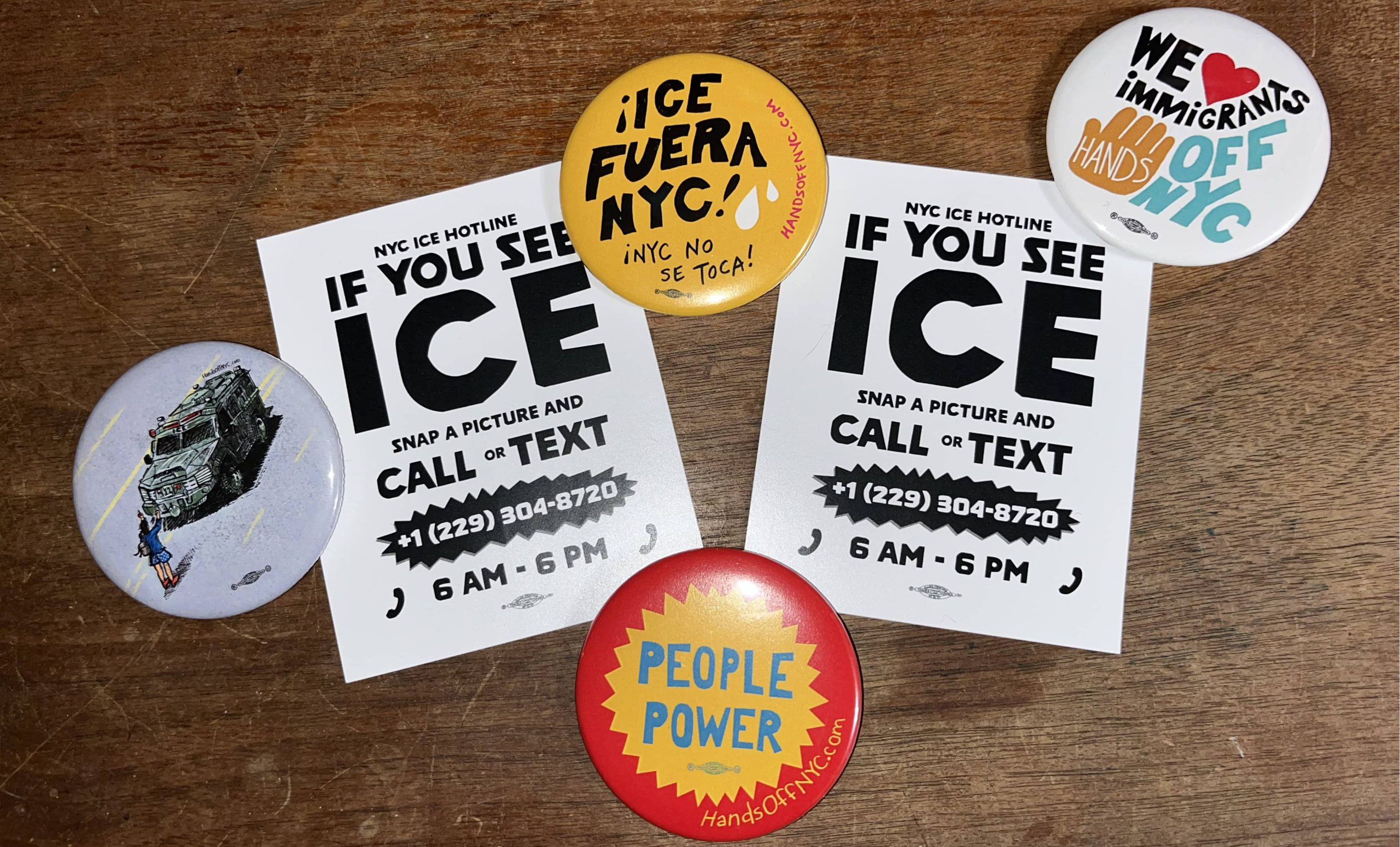
Use your whistles to attract a crowd at the scene to reveal the problem. If it is between 6 am and 6 pm, then call the dispatch hotline 1-229-304-8720 to report the ICE activity. When others gather around, use chants like “Shame, Shame, Shame” or “Let Them Go! Let Them Go!”, shouted at the abductors. That has been a powerful way to reduce the aggression of the federal agents. It breaks their expectation that people will be docile out of fear. As a result, ICE has sometimes given up and left.
The trainers advised us, while documenting a raid, to film what is going on, focus on the facts, not emotions. Record, narrate, and describe the agents (not the abductee), including their clothing, their vehicles, their weapons. Use the SALUTE method to report what you have seen to local ICEWatch groups that you have found and joined. If the agents confront you with any questions, it is helpful to model the KYR response that you do not need to answer their questions. Importantly, they say, do not call the police: adding more armed enforcers to a group of armed enforcers is an escalation, not a slowdown.
It is important to note that Federal agents are not immune from state prosecution. When appropriate, activists can upload videos and photos of the abductions, along with a SALUTE summary, to the NY State Attorney General’s Federal Action Reporting Form. You do not need to provide your own contact information.
Last weekend, in Queens, another well-attended borough-based training was held. The turnout allowed people to start discussing actions they can take in their designated neighborhood groups: Astoria; Woodside with Jackson Heights; Long Island City with Sunnyside; Forest Hills with Rego Park; Corona, Elmhurst, and East Elmhurst with Oakland Gardens; and another group for those from over 20 more Queens neighborhoods. On the following day in Jackson Heights, for two hours, ten people came together for the first time to create whistle packages for distribution to businesses and individuals. Local action is growing.
Serious challenges, of course, remain. It is immigrants themselves who must lead NYC’s battle with ICE. As the Hands Off NYC coalition itself insists, it is up to local communities to build networks and organize the fightback. A decisive role in our area will likely be played by the deeply rooted local immigrant justice organizations, who may have their own analyses of the situation, and their own tactics.
Yet Hands Off NYC has, in a way, “broken the ice,” unleashing the energy of, and offering resources to, thousands of New Yorkers who are eager to oppose ICE. They have also given activists in various neighborhoods a framework for meeting and figuring out the way forward together.
To close, we offer a humble extension to the MLK Jr. quote that opened this article:
Freedom is never voluntarily given by the oppressor; It must be demanded by the oppressed; who must be defended by the people.
WHAT CAN WE DO?
- Check out Hands Off NYC’s website for resources and future trainings.
- Seek out and join any ICEWatch group in your neighborhood.
- Sign and circulate the Solidarity Pledge.
2. Neighborhood ICE Raids: Update
“This is the first time we’ve seen something like this in Jackson Heights, on this level.” –neighbor, quoted in Queens Daily Eagle (12/4/25)
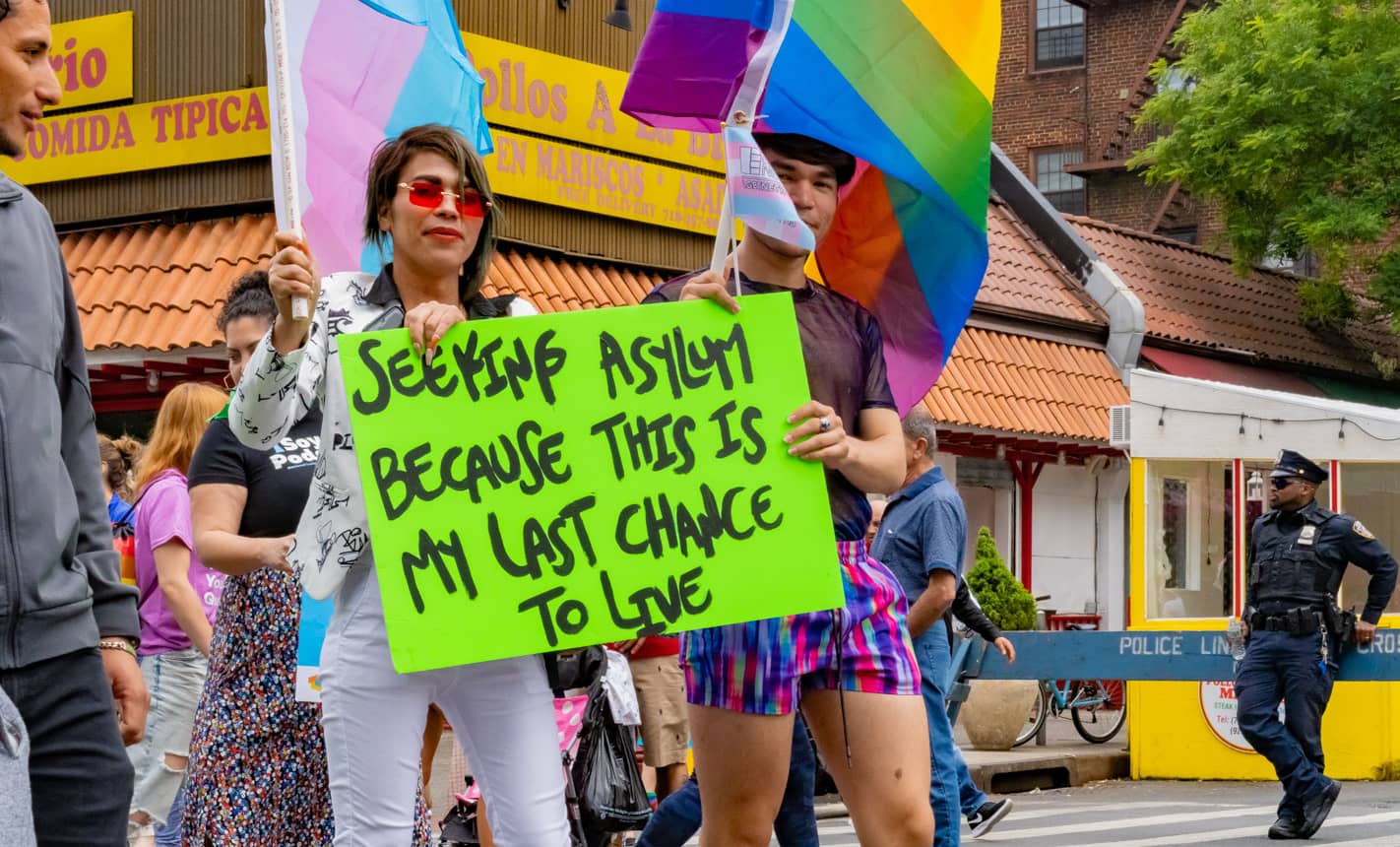
The news travelled fast and many of our readers may have heard: In the early morning of Thursday, December 4, dozens of federal agents armed with assault weapons arrived in unmarked vehicles and a helicopter to conduct a raid on a residential building near 34th Ave and 88th St. Many of the agents wore black masks and HSI uniforms (Homeland Security Investigations, an investigative arm of ICE). A video of the raid, circulated by State Senator Jessica Ramos, shows a militarized swarm of agents with rifles in our streets. Two residents of the building were taken away in handcuffs, while neighbors also swarmed the pre-dawn scene to verbally confront the armed agents.
The names of the people taken, where they are now, the target and rationale for the militarized spectacle of arrest remain unknown. But we do know this: one Jackson Heights resident reported “incredible pride at how many people showed up at six in the morning and just yelled in the faces of ICE agents on the street.”
In the hour before the December 4 raid, the masked federal agents blocked local traffic and set up a checkpoint for cars at a residential intersection. “Taken together, these raids and roadblocks build a steady drumbeat of fear and spectacle, even when there are no cameras around,” notes Epicenter news. The Jackson Heights operation, they explain, fits a broader pattern where we see ICE increasingly conduct “semi-covert” and quick “surgical actions” across the NYC boroughs, rather than the more publicized, dramatic raids we have seen documented on social media nationwide. “The effect is the same, if not greater—an atmosphere of constant fear and uncertainty for immigrants who live, work, congregate and raise families on these blocks.”
As JHISN reports in our article above, people are getting angry and getting organized as a stunningly reckless, sadistic, and lawless mass deportation campaign ramps up and gets all too real. But we also join with longstanding immigrant justice groups, embedded in local immigrant communities, to caution against a singular focus on the threat and terror of visible ICE raids. We are reminded that solidarity includes honoring the existing immigrant networks of collective defense and community knowledge—invisible to those of us outside the networks—that have been doing the work behind the scenes to educate, communicate, defend, and support. We are asked to consider extending our commitments beyond whistles and rushing to the latest ICE sighting, to also include:
- Fundraising and donations: Organize aware friends and family into a rotating monthly donation pool. Fundraise in your pool for immigrant-led local groups who are doing direct mutual aid and support with impacted families around legal fees, rent, or lost income due to detentions.
- Legal support: Attend legal webinars and monitor the constantly changing legal landscape for people who are detained. By supporting families or individuals through ongoing legal cases, we can learn hands-on what is needed and what is possible.
- Relations with activists living near detention centers: Reach out to and support the work of activists and allies who are geographically close to immigrant detention centers in New York and New Jersey or elsewhere. What actions can facilitate support for people being released from detention, or families trying to visit loved ones who are detained?
As one respected Queens-based immigrant justice group notes: “The deportation machine is big and has many parts, we must match it with our skillsets and numbers.”
In just this past week, there have been reports of ICE using the vacant Rite Aid parking lot on Northern Blvd for a staging ground, and multiple ICE sightings in East Jackson Heights and Corona, with one arrest near the corner of Junction and Roosevelt. As responding to local threats becomes more urgent, let’s keep sharing what works. Let’s reflect on what we are best positioned to do. Let’s remember that all of this is also emotion work that needs to be grounded and sustained. And let’s collectively attend to how power is distributed within our cultures of defiance and our communities of care.
WHAT CAN WE DO?
- Check out the three bullet points above–do what you can and keep on imagining more!
- Attend NYIC weekly neighborhood defense trainings.
In solidarity and with collective care,
Jackson Heights Immigrant Solidarity Network (JHISN)
Follow @JHSolidarity on Facebook and Twitter and share this newsletter with friends, families, neighbors, networks, and colleagues so they can subscribe and receive news from JHISN.